PAT Testing in Schools: Why Summer is the Best Time to Get it Done
Schools use electrical equipment every day. From laptops and interactive whiteboards to kettles in the staff room, portable appliances are essential for teaching and running the school.
Like any equipment, these appliances can become damaged over time. Worn cables, cracked plugs and loose connections can all become electrical hazards if they aren't spotted early.
That's why PAT Testing in Schools is so important. It helps schools check that portable electrical equipment is safe to use and supports their wider health and safety responsibilities.
In this guide, we'll explain why School PAT Testing matters, whether it's a legal requirement and why the summer holidays are the best time to get it done.
Why is PAT Testing Important in Schools?
Schools are busy places. Electrical equipment is used every day by teachers, support staff and site teams. Some items are moved from room to room, while others are used by many different people throughout the day.
Over time, this can lead to damage that isn't always obvious. A frayed cable or damaged plug could increase the risk of electric shock or even fire.
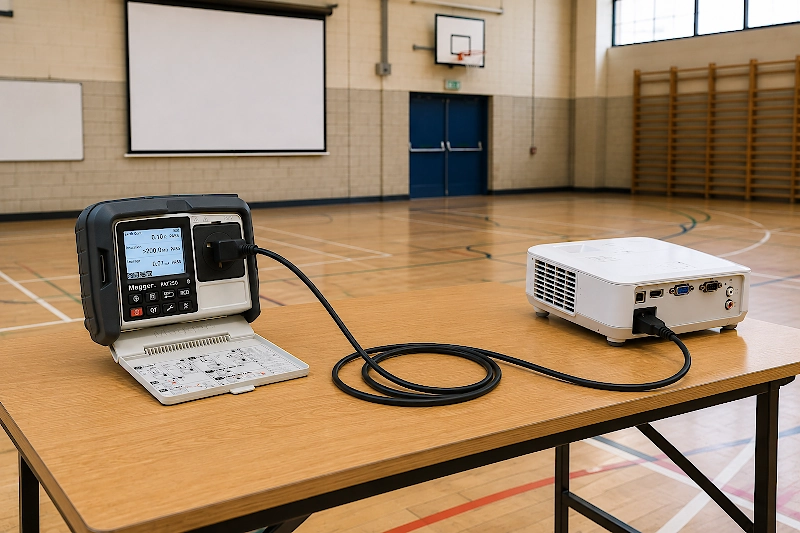
Portable Appliance Testing for schools helps identify these problems before they become a safety risk. It combines a visual inspection with electrical tests to check that equipment is safe to use.
PAT Testing also helps schools keep accurate maintenance records and shows they are taking electrical safety seriously.
What Equipment Needs PAT Testing?
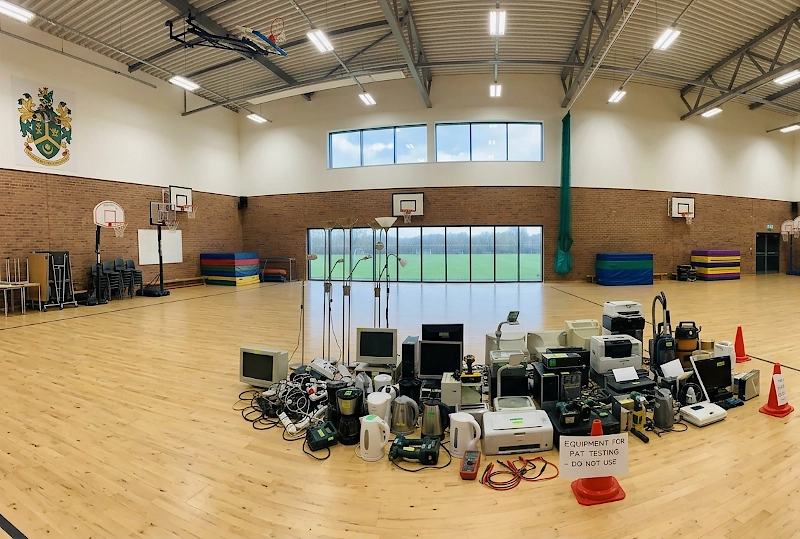
Most schools have hundreds of portable electrical appliances across classrooms, offices and shared spaces.
Common items include:
- Laptops and desktop computers
- Interactive whiteboards and projectors
- Printers and photocopiers
- Phone chargers and extension leads
- Kettles, microwaves and other kitchen appliances
- Vacuum cleaners and cleaning equipment
- Power tools used by site or maintenance teams
Not every appliance needs to be tested at the same time. A good PAT Testing schedule is based on how often equipment is used, where it is used and how likely it is to become damaged.
Is PAT Testing a Legal Requirement?
This is one of the questions we hear most often.
The answer is no. There is no law that says every portable appliance in a school must be PAT tested every year.
However, schools do have a legal duty to keep electrical equipment safe. The Electricity at Work Regulations 1989 require employers to maintain electrical systems and equipment to prevent danger.
PAT Testing is one of the easiest ways to show that equipment is being checked and maintained properly. When combined with regular visual inspections and good record keeping, it helps schools demonstrate that they are managing electrical risks responsibly.
Why Carry Out PAT Testing During the Summer Holidays?
For many schools, the summer break is the best time to complete PAT Testing during school holidays.
Less disruption
With pupils away and fewer staff on site, testing can be completed without interrupting lessons or daily activities.
Easier access
Classrooms, offices and specialist teaching areas are much easier to access during the holidays. Equipment can be tested more quickly, making the process more efficient.
Time to fix any problems
If an appliance fails its inspection, there is usually enough time to repair or replace it before the new school year begins. That means fewer surprises when staff return in September.
Keep maintenance on track
Many schools already carry out decorating, IT upgrades and planned maintenance during the summer. Adding PAT Testing to the schedule helps keep everything organised and reduces disruption throughout the rest of the year.
Planning for the New School Year
PAT Testing works best when it's part of a wider maintenance plan.
Keeping an up-to-date list of electrical equipment, carrying out regular visual checks and reviewing your PAT Testing schedule each year will help keep your school safe and compliant.
Whether testing is completed in-house or by an external contractor, good planning makes the process quicker and easier to manage.
❓ Frequently Asked Questions (FAQ)
Q1: How often should schools carry out PAT Testing?
A. There is no single testing interval for every appliance. Schools should decide how often equipment is tested based on risk, usage and the environment it is used in.
Q2: Who can carry out PAT Testing in schools?
A. PAT Testing should be carried out by someone who is competent, trained and able to understand the test results. This could be an in-house member of staff or an external contractor.
Q3: What happens if an appliance fails a PAT test?
A. If an appliance fails, it should be taken out of use until it has been repaired or replaced. This helps prevent unsafe equipment being used by staff, pupils or visitors.
Conclusion
PAT Testing plays an important role in maintaining school electrical safety. While it isn't a legal requirement, schools are responsible for making sure the electrical equipment they provide is safe to use.
Carrying out PAT Testing in Schools during the summer holidays makes the process easier, reduces disruption and gives you time to deal with any faulty equipment before the new term begins.
If you'd like advice on PAT Testing equipment, calibration services or electrical safety training, the team at Acutest Direct is here to help.
🎓 PAT Tester Comparison for Schools, Colleges & Universities
This PAT tester comparison is designed for people who in-house facility manage schools, colleges and universities and need to carry out electrical safety checks within the facility.
The comparison focuses on practical buying considerations such as equipment volume, recording method, ease of use and whether a tester is suitable for straightforward appliance testing, digital reporting, larger estates or broader risk assessment work.
At a Glance
| Features |
Volume of Equipment |
Manual or Downloadable |
Ease of Use |
Best For / Comments |
| Seaward |
| PrimeTest 50 |
Low volume |
Manual / PATMobile |
Very easy |
Simple manual tester for small schools carrying out occasional PAT testing. |
| PrimeTest 100 |
Low to medium volume |
Manual / PATMobile |
Very easy |
Great entry-level tester with measured values and PATMobile compatibility. |
| PrimeTest 250+ |
Medium volume |
Downloadable |
Easy |
Ideal for schools wanting downloadable records and printed labels without paying for a professional contractor-level tester. |
| Apollo 400+ |
Medium to high volume |
Downloadable |
Easy |
Excellent for medium-sized estates requiring professional reporting. |
| Apollo 500+ |
High volume |
Downloadable / Wi-Fi |
Moderate learning curve |
Ideal for larger schools, colleges and multi-site academies needing risk-based retesting and advanced reporting. |
| Apollo 600+ |
Very high volume |
Downloadable / Wi-Fi |
Moderate learning curve |
More than a PAT tester—it includes workplace risk assessments, health & safety inspections, photo evidence and is ideal for universities and large estates. |
| Kewtech |
| EZYPAT |
Low volume |
Manual |
Very easy |
Excellent entry-level tester focused on straightforward PAT testing with minimal training. |
| EZYPAT Plus |
Medium volume |
Manual |
Easy |
Builds on the EZYPAT by adding run leakage testing and greater flexibility for testing a wider range of appliances. |
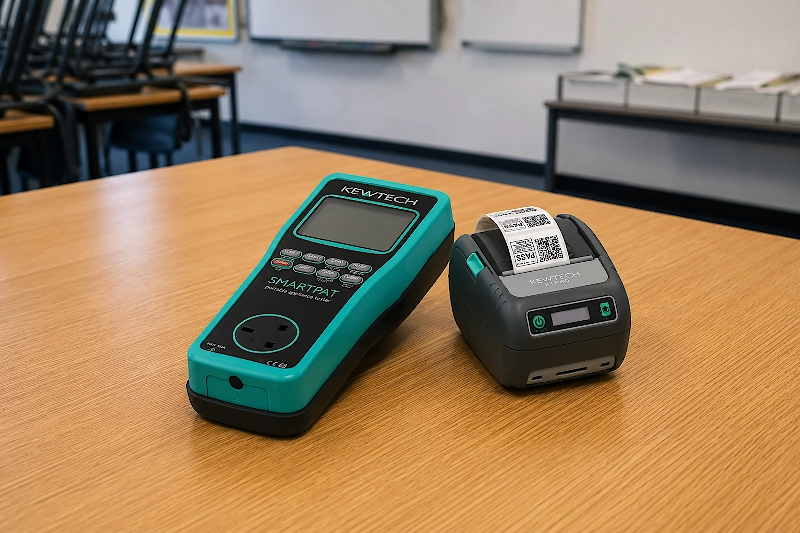
| SmartPAT |
Medium to high volume |
App controlled |
Easy |
Excellent for facilities teams wanting app-controlled testing and remote connectivity. |
| Megger |
| PAT120 |
Low volume |
Manual |
Very easy |
Ideal for occasional PAT testing where simplicity is more important than advanced reporting. |
| PAT150 |
Medium volume |
Manual |
Easy |
Adds portable RCD testing and configurable test groups, making it a practical choice for organisations with a wider range of electrical equipment. |
| PAT150R |
Medium volume |
Manual |
Easy |
Offers the convenience of rechargeable batteries for regular use. |
| PAT250 |
High volume |
Bluetooth reporting |
Easy |
A modern handheld tester combining ease of use with Bluetooth connectivity and software integration. |
| PAT450 |
Very high volume |
Downloadable |
Moderate learning curve |
Professional contractor tool offering flash testing and high-current bond testing—typically more capability than most education estates require. |
| Martindale |
| HPAT425 |
Low volume |
Manual |
Very easy |
Simple, lightweight tester aimed at organisations carrying out straightforward PAT testing with clear pass/fail results. |
| HPAT550 |
Medium volume |
Manual |
Easy |
Adds measured values and enhanced usability while remaining easy to learn, making it a good option for facilities teams carrying out routine testing. |
| HPAT650 |
Medium volume |
Internal storage |
Easy |
Suitable for organisations wanting stored results without moving to full PC-based reporting. |
What does Volume of Equipment mean?
Instead of quoting internal memory, this comparison explains volume in terms users understand.
| Features |
Typical Number of Appliances |
Typical Customer |
| Low volume |
Up to 250 |
Primary schools, nurseries, churches |
| Medium volume |
250–1,500 |
Secondary schools, GP surgeries, offices |
| High volume |
1,500–5,000 |
Colleges, academies, factories |
| Very high volume |
5,000+ |
Universities, NHS Trusts, contractors |
Recording Method
Rather than memory, this comparison explains how people actually work.
| Features |
Explanation |
| Manual |
Record results by hand or spreadsheet |
| Manual + App |
Results entered on a mobile app |
| Downloadable |
Results transferred to PC software |
| Bluetooth |
Wireless transfer to software |
| Wi-Fi / Cloud |
Remote synchronisation and reporting |
Ease of Use
Ease of use is shown in plain English rather than a score.
- Excellent for first-time PAT testing
- Very easy to learn
- Easy
- Moderate learning curve
- Best suited to experienced users
Electrical Test Comparison
Recommendations by User Type
| Features |
Recommended Models |
Comments |
| Best for first-time PAT testing |
Seaward PrimeTest 50, Kewtech EZYPAT, Megger PAT120, Martindale HPAT425 |
Simple manual testers for straightforward PAT testing with minimal training. |
| Best for primary schools |
Seaward PrimeTest 50, Seaward PrimeTest 100, Kewtech EZYPAT, Megger PAT120 |
Best suited to low volume testing where ease of use is the priority. |
| Best for secondary schools |
Seaward PrimeTest 100, Seaward PrimeTest 250+, Kewtech EZYPAT Plus, Megger PAT150, Martindale HPAT550 |
Suitable where there are more appliances and a wider range of electrical equipment. |
| Best for colleges |
Seaward PrimeTest 250+, Seaward Apollo 400+, Seaward Apollo 500+, Kewtech SmartPAT, Megger PAT250 |
Best suited to higher equipment volumes and improved record keeping. |
| Best for universities |
Seaward Apollo 500+, Seaward Apollo 600+, Megger PAT450 |
Suitable for very high volume testing, multi-building estates and more advanced reporting requirements. |
| Best for multi-academy trusts |
Seaward Apollo 500+, Seaward Apollo 600+, Kewtech SmartPAT, Megger PAT250 |
Useful where multiple sites need consistent records and more structured reporting. |
| Best for estates teams |
Seaward Apollo 400+, Seaward Apollo 500+, Seaward Apollo 600+, Kewtech SmartPAT, Megger PAT250 |
Best suited to facilities teams responsible for regular in-house testing. |
| Best for contractors |
Seaward Apollo 600+, Megger PAT450 |
More suitable for professional users carrying out larger volumes of testing. |
| Best value |
Seaward PrimeTest 100, Seaward PrimeTest 250+, Kewtech EZYPAT Plus, Megger PAT150 |
Good balance of functionality, usability and practical suitability. |
| Most advanced |
Seaward Apollo 600+, Megger PAT450 |
Advanced professional-level instruments with features beyond typical entry-level in-house testing. |
Free PAT Tester Demonstrations & Technical Advice
Still unsure which PAT tester is right for your organisation? Contact our technical team for free expert advice, or arrange a free online or on-site PAT tester demonstration to compare models and find the best solution for your requirements.
VIEW THE PAT TESTER RANGE