About Personal Gas Monitors
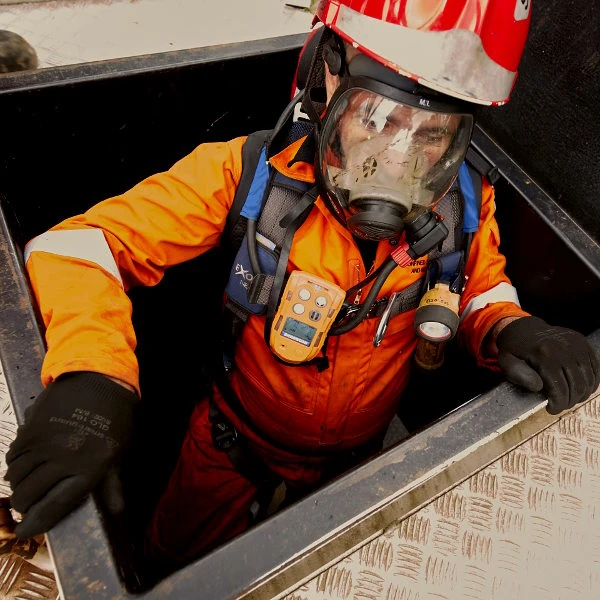
Personal gas monitors are portable gas detectors designed to protect workers from hazardous gases in industrial environments. Worn on clothing or PPE, these compact devices continuously monitor the air in the user’s breathing zone and provide instant alerts when unsafe gas levels are detected.
Personal gas monitors are commonly used in:
- confined space entry
- oil and gas
- utilities
- wastewater treatment
- manufacturing
- chemical plants
- offshore work
- emergency response
These devices help improve worker safety by detecting dangerous gases before they become a serious risk.
What Does a Personal Gas Monitor Detect?
Depending on the model, personal gas monitors can detect a range of gases, including:
- Oxygen (O₂)
- Carbon Monoxide (CO)
- Hydrogen Sulphide (H₂S)
- Combustible gases (LEL)
- Methane (CH₄)
- VOCs (Volatile Organic Compounds)
Single-gas monitors detect one gas only, while multi-gas monitors can detect several gases at the same time.
Key Features of Personal Gas Monitors
Real-Time Gas Detection
Personal gas monitors continuously check the surrounding atmosphere and alert users immediately if gas levels become unsafe.
Audible, Visual and Vibrating Alarms
Most gas monitors include loud alarms, flashing lights, and vibration alerts to warn workers quickly.
Compact and Lightweight Design
Portable gas detectors are designed for comfortable all-day use and can easily be clipped onto workwear or PPE.
Rugged Industrial Construction
Many personal gas monitors are built for harsh environments and offer protection against dust, water, and impact damage.
Long Battery Life
Reliable battery performance helps ensure continuous protection throughout long work shifts.
Why Use a Personal Gas Monitor?
Gas hazards are often invisible and difficult to detect without specialist equipment. Personal gas monitors provide an early warning of dangerous conditions and help reduce the risk of exposure to toxic or combustible gases.
Benefits include:
- improved worker safety
- continuous gas monitoring
- faster emergency response
- support for HSE compliance
- safer confined space working
- protection for lone workers
Modern gas monitors use advanced sensor technology to provide fast and reliable readings in demanding industrial environments.
Calibration and Bump Testing
Regular calibration and bump testing help ensure gas monitors remain accurate and reliable.
Routine testing helps:
- confirm sensor performance
- maintain accurate readings
- reduce equipment failure risks
- support workplace safety procedures
Many industries require scheduled calibration as part of their health and safety policies.
❓ Frequently Asked Questions (FAQ)
Q1: What is a personal gas monitor?
A. A personal gas monitor is a wearable gas detector used to warn workers about hazardous gases in the surrounding area.
Q2: What is the difference between a single-gas and multi-gas monitor?
A. Single-gas monitors detect one gas only. Multi-gas monitors detect several gases at the same time.
Q3: Are personal gas monitors used for confined space entry?
A. Yes. Personal gas monitors are commonly used during confined space work to detect toxic gases, oxygen depletion, and combustible atmospheres.
Q4: What is bump testing?
A. A bump test checks that the gas monitor sensors and alarms are working correctly using a known test gas.
Q5: How often should a gas monitor be calibrated?
A. Calibration frequency depends on the manufacturer and working environment. Regular testing is recommended to maintain accurate performance.