About Ground Resistance Testers for Substations & Utilities
Ground resistance testers for substations and utilities are specialist instruments used to measure the performance of grounding systems in high-voltage electrical environments. These instruments help engineers assess earth resistance, ground impedance, and soil resistivity to ensure electrical systems remain safe, stable, and compliant.
Reliable grounding is critical in substations and utility networks as it provides a safe path for fault currents and helps protect equipment, infrastructure, and personnel.
Ground resistance testing is commonly carried out across:
- electrical substations
- utility networks
- power generation sites
- renewable energy installations
- lightning protection systems
- industrial facilities
- transmission and distribution infrastructure
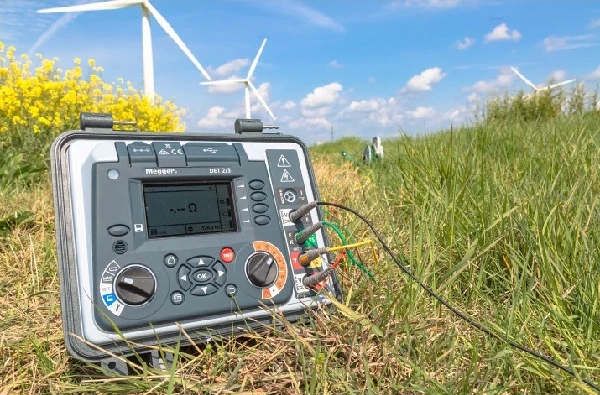
Why Grounding Is Important
Effective grounding plays a vital role in maintaining the safety and reliability of electrical systems.
Proper grounding helps:
- reduce the risk of electric shock
- protect transformers and switchgear
- limit damage during electrical faults
- improve fault current dissipation
- support reliable system performance
- maintain compliance with industry standards
Poor grounding can lead to equipment failure, unstable electrical systems, and increased safety risks.
What Do Ground Resistance Testers Measure?
Ground resistance testers are designed to evaluate the effectiveness of grounding systems by measuring:
- earth resistance
- ground impedance
- soil resistivity
- continuity of grounding systems
Lower resistance values generally indicate a more effective grounding system capable of safely dissipating fault currents.
Some advanced instruments also provide detailed analysis for large grounding grids and high-voltage substations.
Common Ground Testing Methods
Fall-of-Potential Testing
This widely used method measures resistance by injecting current into the ground and calculating the voltage drop between test electrodes.
Wenner Soil Resistivity Testing
The Wenner method is used to measure soil resistivity and assess ground conditions for new installations and grounding system design.
Stakeless Testing
Some modern instruments offer stakeless testing, allowing measurements without driving additional stakes into the ground. This can simplify testing in difficult environments.
Clamp-On Ground Testing
Clamp-style instruments allow testing on live grounding systems without disconnecting the installation.
Key Features of Ground Resistance Testers
Modern ground resistance testers are designed for accurate and reliable testing in demanding environments.
Common features include:
- high accuracy measurements
- earth resistance and impedance testing
- soil resistivity testing
- stakeless testing capability
- digital displays
- data logging functions
- rugged field-ready construction
- CAT safety ratings
Many instruments are designed for use in substations, utilities, and industrial environments where reliable grounding is essential.
Choosing the Right Ground Resistance Tester
When selecting a ground resistance tester, consider:
- substation or utility application
- testing method required
- soil resistivity requirements
- clamp or stake testing
- measurement range
- data logging capability
- site conditions
- compliance standards
Whether you require a portable tester for routine inspections or an advanced instrument for substation grounding analysis, choosing the correct equipment is essential for accurate and reliable testing.
❓ Frequently Asked Questions (FAQ)
Q1: What is a ground resistance tester?
A. A ground resistance tester is used to measure the effectiveness of grounding systems in electrical installations and substations.
Q2: Why is ground resistance testing important?
A. Ground resistance testing helps ensure fault currents can safely dissipate into the ground, reducing safety risks and protecting electrical equipment.
Q3: What is soil resistivity testing?
A. Soil resistivity testing measures how well the ground can conduct electrical current and is commonly used when designing grounding systems.
Q4: What is the Wenner testing method?
A. The Wenner method is a common technique used to measure soil resistivity using multiple test electrodes spaced at equal distances.
What is stakeless ground testing?
A. Stakeless testing allows grounding measurements to be taken without driving additional stakes into the ground, making testing faster and more convenient in some environments.