Electrical Safety Implications of the Future Homes Standard 2025
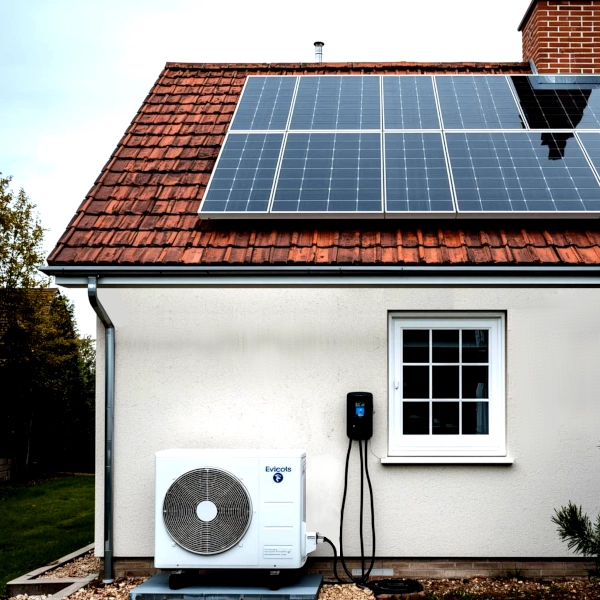
The UK housing sector is undergoing a structural shift. Under the Future Homes Standard (FHS) 2025, new homes are being steered away from fossil fuel heating toward low-carbon, electrically driven solutions. This transition results in homes that are more equipment-dense and increasingly dependent on power-electronic technologies.
While the FHS 2025 is primarily an energy and carbon policy, its knock-on effects for electrical safety, inspection, and testing are immediate.
What the Data Already Tells Us
Health and Safety Executive (HSE) RIDDOR statistics for the 2024/25 period record approximately 150 reported work related electrical contact incidents, with 7 fatal outcomes.
Statistics taken from RIDDOR (Reporting of Injuries, Diseases and Dangerous Occurrences Regulations)
The relevance to the Future Homes Standard 2025 is not that it introduces new hazards, but that it accelerates trends toward higher electrical loads and more complex systems operating continuously. As homes evolve, electrical systems are no longer limited to simple lighting and socket circuits. Heat pumps, inverter-driven compressors, mechanical ventilation, EV charge points, and energy management systems are becoming the new baseline.
Heat Pumps and Residual Current Protection
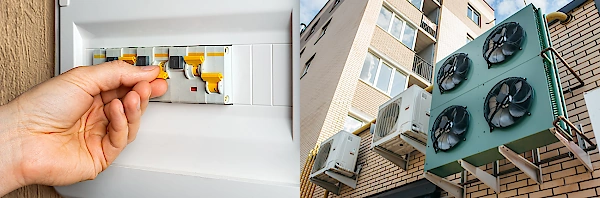
One clear example of increased complexity is the widespread use of electrically driven heat pumps. Modern units typically utilise inverter technology which, under certain conditions, can produce smooth DC components or high-frequency residual currents.
To address this, BRITISH STANDARD Requirements for Electrical Installations BS 7671:2018 (Amendment 3:2024) recognises the use of Type B and Type B HP RCDs for specific applications involving power electronics. Selection depends on the equipment characteristics and manufacturer instructions to prevent RCD blinding. RCD blinding occurs when DC leakage saturates the magnetic core of a standard RCD, preventing it from operating correctly during a fault.
It is important to note that the increased use of Type B HP RCDs does not affect the minimum verification requirements.
Testing to BS 7671, specifically Regulation 643.7.1, still requires confirmation of RCD performance using the standard Type AC test at 1 × IΔn for initial verification. This ensures that standard multifunction testers remain suitable for compliance, provided the operative understands the device under test and its limitations.
Ventilation and System Interaction
Homes designed for the Future Homes Standard 2025 will be significantly more airtight. This places a primary reliance on mechanical ventilation, such as MVHR or dMEV, to maintain indoor air quality.
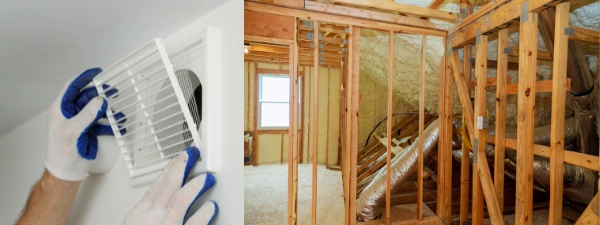
From an electrical perspective, this leads to:
- More permanently connected equipment: This increases the number of potential points of failure.
- Continuous duty cycles: Systems operate 24/7, increasing thermal stress on conductors and terminations.
- System interdependence: A failure in the electrical supply can directly affect habitability, moisture control, and occupant health.
As ventilation becomes a critical building service rather than a passive feature, verification of airflow performance becomes essential. Anemometers are used to confirm that designed air change rates are actually being delivered. As with all test instruments, their readings are only reliable if the equipment is correctly calibrated and used by a competent person.
VIEW AIR FLOW & ANEMOMETERS
Safe Isolation: The Non-Negotiable Core
If there is one area where the Future Homes Standard 2025 changes nothing, it is safe isolation. It remains the single most effective control measure against electric shock.
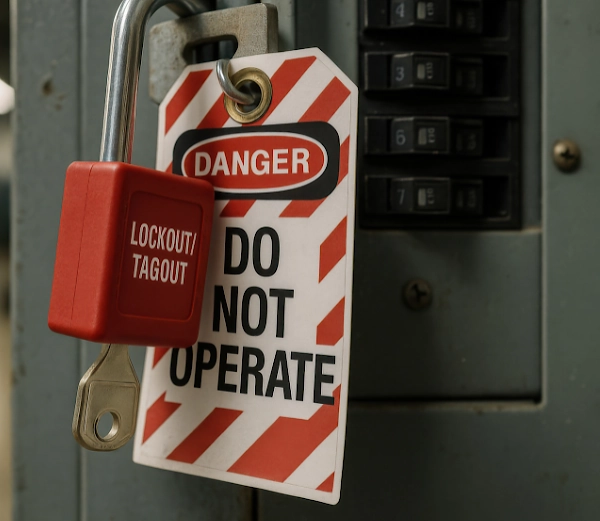
However, the FHS 2025 often introduces solar PV and battery storage into the building fabric. This increases the likelihood of multiple sources of supply being present. The safe isolation process itself remains unchanged, but it requires higher vigilance:
- Identify all sources of supply, including the grid, solar PV, battery storage, and any stored energy within equipment.
- Secure isolation using appropriate lockable devices and lock-off signage to prevent accidental re-energisation.
- Before commencing testing, confirm the voltage indicator is functioning correctly by using a proving unit.
- Prove dead by testing all live conductors and combinations using an approved voltage indicator, ensuring no voltage is present. Re-prove the voltage indicator on a proving unit after testing.
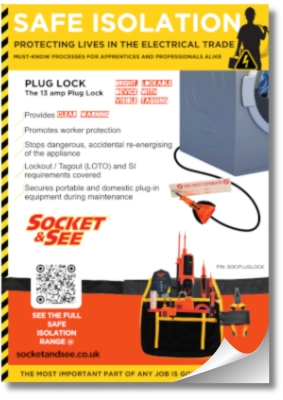
VIEW SOCKET & SEE SAFE ISOLATION / PROVING UNITS
The Hard Reality
The Future Homes Standard 2025 is driving a fundamental change in how homes are designed and powered. What it does not change are the physical realities of electricity. It remains hazardous, and errors remain unforgiving.
Safe isolation, correct inspection, and compliant testing are not optional extras. They are the foundation of a functional, low-carbon future. As the housing sector evolves, the industry challenge is not to relearn safety, but to apply it rigorously in systems that leave far less margin for error.
VIEW THE FUTURE HOME & BUILDINGS STANDARDS
Final Thought
As homes become more dependent on electrical and mechanical systems that operate continuously, performance is critical and must be checked. This relies on measurements using test equipment, from electrical testers to airflow meters. In every case, results are only trustworthy if the equipment is in good condition and correctly calibrated. Poorly maintained or uncalibrated test instruments can give false confidence, affecting both safety and compliance.
VIEW ACUTEST CALIBRATION SERVICES