🏘️ Managing Damp, Mould, and Airflow in Social Housing
- If you aren’t measuring it, you aren’t managing it
In this blog we will look at:
1️⃣ What Causes Mould?
2️⃣ The Regulatory Shift: No More “Lifestyle” Excuses
3️⃣ Where Damp and Airflow Failures Commonly Occur
🏢 Flats – The “Building Lungs” Risk
4️⃣ A Human-Centric Responsibility Model
5️⃣ Measurement → Fix → Prove
6️⃣ Why This Approach Works
7️⃣ Feature Product: Reliable Ventilation Diagnostics
8️⃣ Complete List of Moisture, Mould & Ventilation Testing Tools
Mould in a home usually starts when moisture meets the right conditions
The spores are already everywhere (floating invisibly in the air), so the real trigger is dampness. Here’s how it typically gets going:
1. Excess moisture (the big culprit)
2. Poor ventilation (when moist air can’t escape, it settles on surfaces)
3. Cool surfaces + warm air
4. Organic materials to feed on (Mould feeds on everyday stuff, paint, wallpaper paste, dust and skin cells, wood, cardboard, fabrics)
Damp and mould in UK social housing are no longer viewed as minor maintenance issues or cosmetic defects. Following the tragic death of Awaab Ishak and the introduction of Awaab’s Law under the Social Housing (Regulation) Act 2023, they are now recognised as regulated health hazards, reputational risks, and legal liabilities for landlords and housing providers.
As regulatory scrutiny increases and further updates to the Decent Homes Standard come into force, housing providers must move beyond surface-level cleaning and reactive repairs. Success now requires a human-centric, evidence-led approach - one that measures conditions accurately, fixes root causes, and proves that homes are safe and healthy to live in.
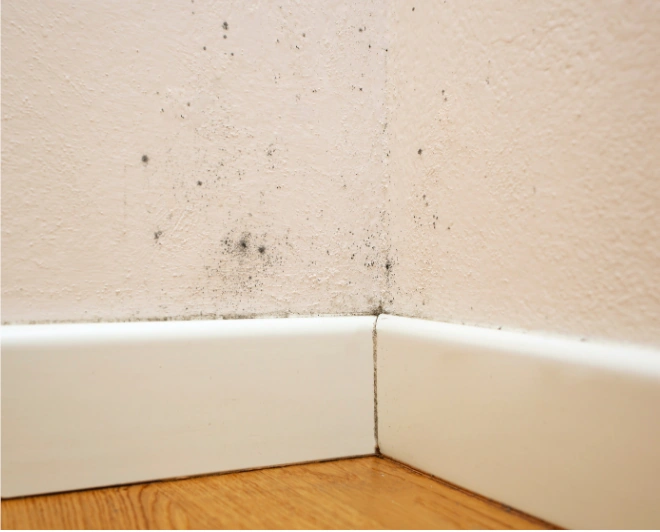
Lower Wall Mould: Condensation (the usual culprit) - Warm, moist indoor air hits cold walls near floor level, condenses, and feeds mould.
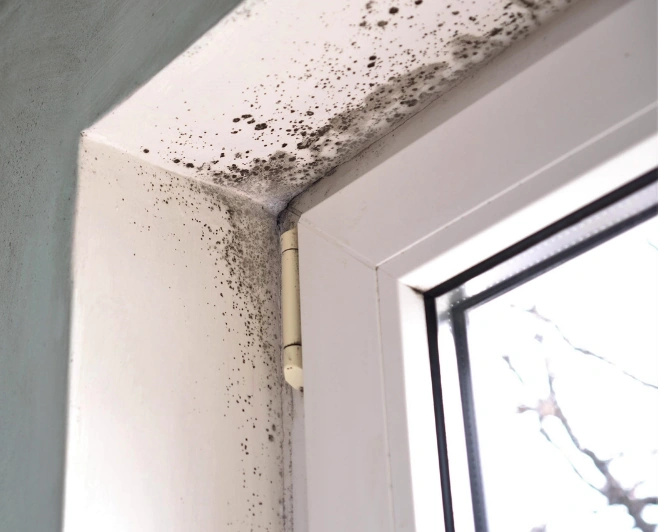
Around Window/Door Mould: Condensation (by far the most common cause). Warm, moist indoor air (from breathing, showers, cooking) hits the coldest surface in the room (the window) and turns into water.
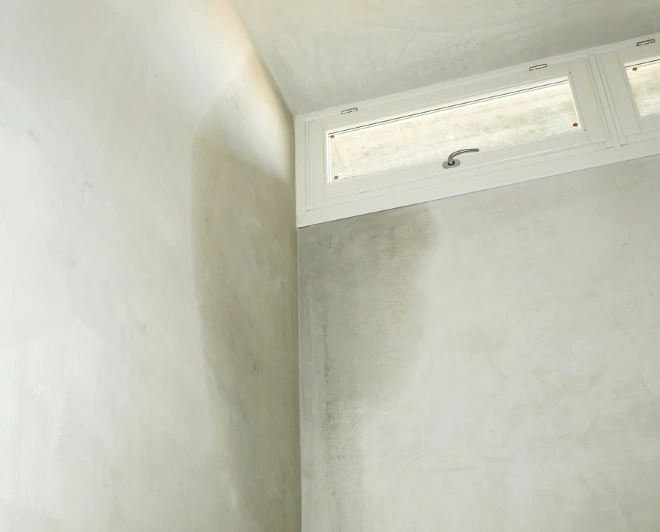
Where Roof Meets Wall Damp: Failed or damaged flashing (most common)
⚖️ The UK Regulatory Context: No More “Lifestyle” Excuses
The Housing Ombudsman’s Spotlight Report was a turning point. It explicitly banned the use of "lifestyle" (e.g., "the tenant doesn't open windows") as a default defense.
Mandatory Timelines (Awaab's Law)
As of late 2024 and into 2025, social landlords must adhere to strict government-mandated timelines:
10 Working Days: To investigate a report of damp and mould.
24 Hours: To address any emergency hazard that poses a significant risk.
7 Days: To begin remediation work after the investigation.
Landlords must now provide a written summary of findings to the tenant, shifting the burden of proof onto the provider to show the home is fit for habitation under the HHSRS (Housing Health and Safety Rating System).
📍 Where Damp, Mould, and Poor Airflow Typically Occur
🏠 House Mould and Damp (The Thermal Bridge Problem)
In traditional social housing stock, one of the most common drivers of persistent mould is thermal bridging - where elements such as concrete lintels, floor slabs, or wall junctions remain colder than surrounding surfaces.
- Cold external walls and corners
- Window reveals and frames
- Bathrooms with underperforming extract fans
- Bedrooms with high occupancy and poor background ventilation
🔎 KEY FACT: Moisture will condense on cold surfaces regardless of how often mould is cleaned.
🛑 KEY RISK: Treating mould without addressing cold bridges, insulation gaps, or airflow is only a temporary fix.
🏢 Blocks of Flats (Systemic Failure Risk)
In flats, environmental risk is often linked to the building’s "lungs"—the MEV (Mechanical Extract Ventilation) or MVHR (Heat Recovery) systems.
High-risk locations include:
- Vertical service risers (stack effect)
- Internally located flats with limited natural ventilation
- Communal corridors, stairwells, and bin stores
- Boxed-in pipework and ceiling voids
🛑 KEY RISK: If a vertical riser is blocked or a central fan fails, multiple dwellings lose their ability to purge moisture.
✅ VERIFICATION: Confirming airflow at the terminal (using an anemometer) is the only way to prove compliance with Building Regs Approved Document F.