🏘️ How Housing Associations Identify Moisture Trends Across Estates
- Using moisture meters, mould testing and environmental monitoring software
Strategic Objective: Collect Environmental Data and Implement Targeted Remediation
Across large housing portfolios, damp and mould rarely exist as isolated problems. When multiple residents request a damp inspection, report condensation, or ask how to test for mould, it often signals a wider environmental issue across an estate.
Forward-thinking housing associations are now using structured environmental monitoring, digital reporting platforms, and data from every moisture/damp test to identify patterns early - before complaints escalate.
Because today, damp and mould management is no longer reactive maintenance.
It is a data-driven asset strategy.

Turning Isolated Moisture Readings into Estate-Wide Intelligence
From An Individual Damp Inspection → Estate-Level Insight
Traditionally, a contractor would attend a property, use a moisture detector for walls, perhaps carry out basic mould testing, complete a report, and move on.
But when that same build type repeatedly requires:
- A damp inspection
- A moisture reading using a moisture meter
- A request to test for mould
- Ventilation testing due to condensation
…the issue is no longer individual... it's systemic.
The difference today is that housing associations are centralising this inspection data through software.
Why Moisture Data Matters More Than Ever
Under tightening regulatory scrutiny, landlords must demonstrate that homes are safe and free from Category 1 damp hazards.
That means:
- Documented damp inspection records
- Verified mould testing results
- Logged readings from a calibrated moisture meter for walls
- Evidence that ventilation testing has been completed
- Environmental monitoring before and after remediation
Without structured data capture, housing providers cannot prove improvement.
And without aggregation, they cannot identify moisture trends.
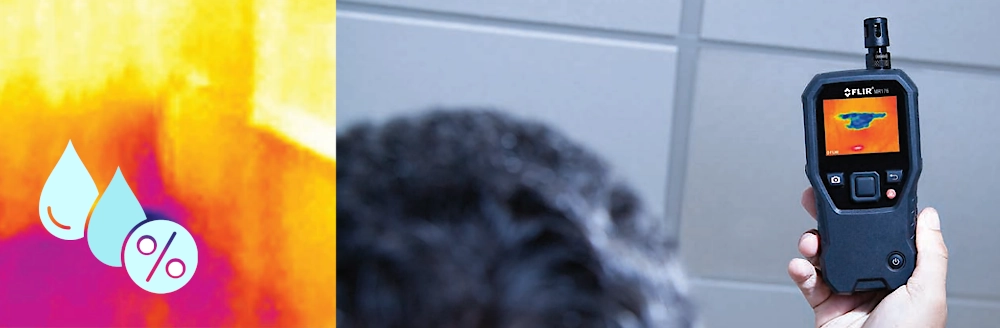
Evidence: Before and After
The Role of the Moisture Meters in Trend Identification. Every time a surveyor uses a moisture meter for walls, floors or other surfaces, they collect more than a reading.
They collect:
- Surface moisture content
- Substrate damp patterns
- Repeat readings at consistent junctions
- Baseline data for comparison
When these readings are uploaded into reporting software instead of handwritten on paper, housing associations can:
- Compare moisture levels across identical flats
- Identify repeated cold bridge signatures
- Detect build-type weaknesses
- Track which blocks require repeated damp inspection
Individually, a moisture detector diagnoses a room. Collectively, it diagnoses an estate.
🔍
Technical Note: Surface vs. Substrate
To identify systemic trends, surveyors now look beyond surface damp. While pin-type readings show moisture at a max depth of 25–50 mm (1"–2") or more (using a pin-probe), non-destructive radio frequency (Search Mode) allows housing associations to see deep into the substrate. This helps distinguish between surface condensation / wall damp and deep-seated structural ingress that might affect an entire block.
Mould Testing and Environmental Monitoring Across Estates
When residents request a test for mould, the immediate response may involve surface cleaning, airflow advice, or a basic inspection. But strategic providers go further.
They combine:
- Mould testing
- Temperature and humidity logging
- Ventilation testing
- Ongoing environmental monitoring
This allows them to identify:
- Seasonal spikes in condensation
- High humidity trends in specific orientations
- Underperforming extract systems
- Blocks with repeated requests to test for mould
Software transforms mould testing from a reactive exercise into a predictive tool.
🌡️
Understanding the Dew Point
Modern environmental monitoring software doesn't just track humidity; it calculates the Dew Point. This is the exact temperature at which air can no longer hold moisture, causing it to condense on cold surfaces. By tracking this across an estate, providers can identify thermal bridges—specific spots in a building's design where mould is mathematically certain to grow unless the insulation is improved.
How Software Turns Damp Inspection Data Into Strategy
Modern reporting platforms allow housing associations to:
✅ Store Every Damp Inspection Digitally
Each moisture meter for walls reading is tagged by:
- Property type
- Block
- Postcode
- Date
- Surveyor
✅ Analyse Moisture Patterns
- Compare moisture levels across estates
- Identify recurring ventilation testing failures
- Track repeat mould testing requests
✅ Monitor Environmental Conditions
Through ongoing environmental monitoring, teams can:
- Log relative humidity trends
- Compare internal temperature differences
- Detect dew point risk
- Validate improvements after works
Without software, moisture data sits in filing systems.
With software, it becomes asset intelligence.
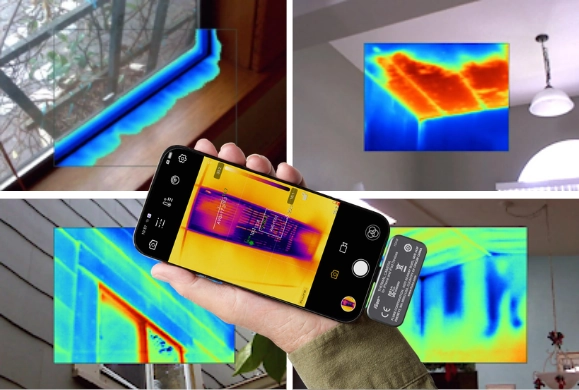 🧰 FLUKE iSee Thermal Accessory + FLUKE iSee App (optional SmartView analysis) 💡 A compact, pocket thermal camera is a first-line thermal tool for identifying damp, moisture intrusion, and insulation gaps in buildings. Ideal for quick surveys and routine checks. For deeper diagnostics, advanced thermal cameras provide higher resolution and greater sensitivity, revealing subtle moisture patterns and hidden defects with improved clarity and confidence.
 👉
Full range of Thermal Cameras
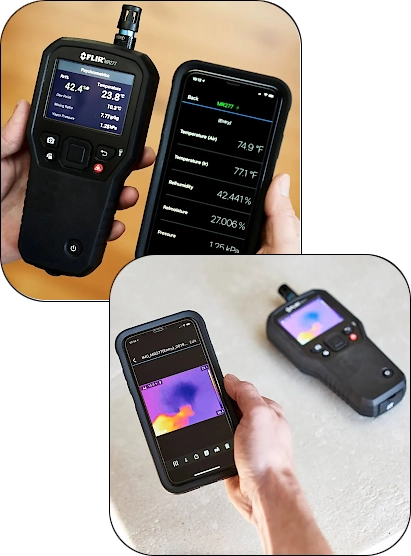 🧰 FLIR 277 Building Inspection System + MeterLink App 💡 Thermal imaging moisture meter with pin & pinless testing, plus RH, temp & dew point. METERLiNK® enables wireless data capture and fast reporting.
 🧰 Testo 417 Vane Anemometer + Testo Smart App 💡 Quickly locate stagnant airflow areas that lead to condensation and mould. Verify performance and document findings to support HVAC repairs and upgrades.
FEATURE PRODUCT
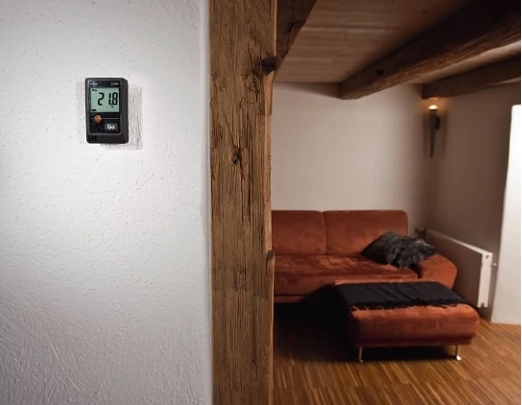
For long-term monitoring, humidity and temperature data loggers provide valuable insight into environmental conditions over time. These devices record data continuously, allowing housing providers to identify moisture trends across properties.
Example: Identifying a Moisture Trend
Consider this scenario:
Five properties in one estate require:
- Damp inspection
- A moisture detector for walls
- A request to test for mould
- Ventilation testing
Each survey identifies elevated readings on external wall corners.
When the data is aggregated, the housing association discovers:
- All properties share the same wall construction
- All are north-facing
- All show similar moisture meter for walls readings
- All demonstrate poor airflow during ventilation testing
What looked like five isolated mould testing jobs becomes one design-related thermal weakness.
That insight only exists because the data was logged, stored, and analysed.
🌀
Beyond the Tissue Test
Modern ventilation testing has moved beyond checking if a fan sounds like it’s working. Surveyors now use Anemometers to measure the actual flow rate in litres per second (l/s). By logging these specific figures into a digital platform, asset managers can identify which types of extractor fans are failing across an entire estate and replace them before the resulting humidity leads to a mould complaint.
The Takeaway
Moisture does not respect tenancy boundaries.
If multiple residents request a damp inspection or ask how to test for mould, there is usually a wider building performance issue at play.
Housing associations that combine:
- Moisture detector for walls readings
- Structured mould testing
- Verified ventilation testing
- Continuous environmental monitoring
- Digital reporting software
Move from reacting to complaints…... to identifying moisture trends across entire estates.
Because in modern asset management:
If you are not logging it... you are not learning from it.
And if you are not analysing it... you are not controlling it.