What is Legionnaires' Disease? Causes, Symptoms and How to Prevent It
Legionnaires' disease is a serious lung infection caused by Legionella bacteria. Although relatively uncommon, it can lead to severe illness, particularly in older adults and those with underlying health conditions. Understanding how the disease develops and how to prevent it is essential for anyone responsible for managing water systems in commercial, public or residential buildings.
Many people searching online use terms such as legionella virus or legionnaires virus, but these are common misconceptions. Legionnaires' disease is caused by Legionella bacteria, not a virus.
What is Legionella?
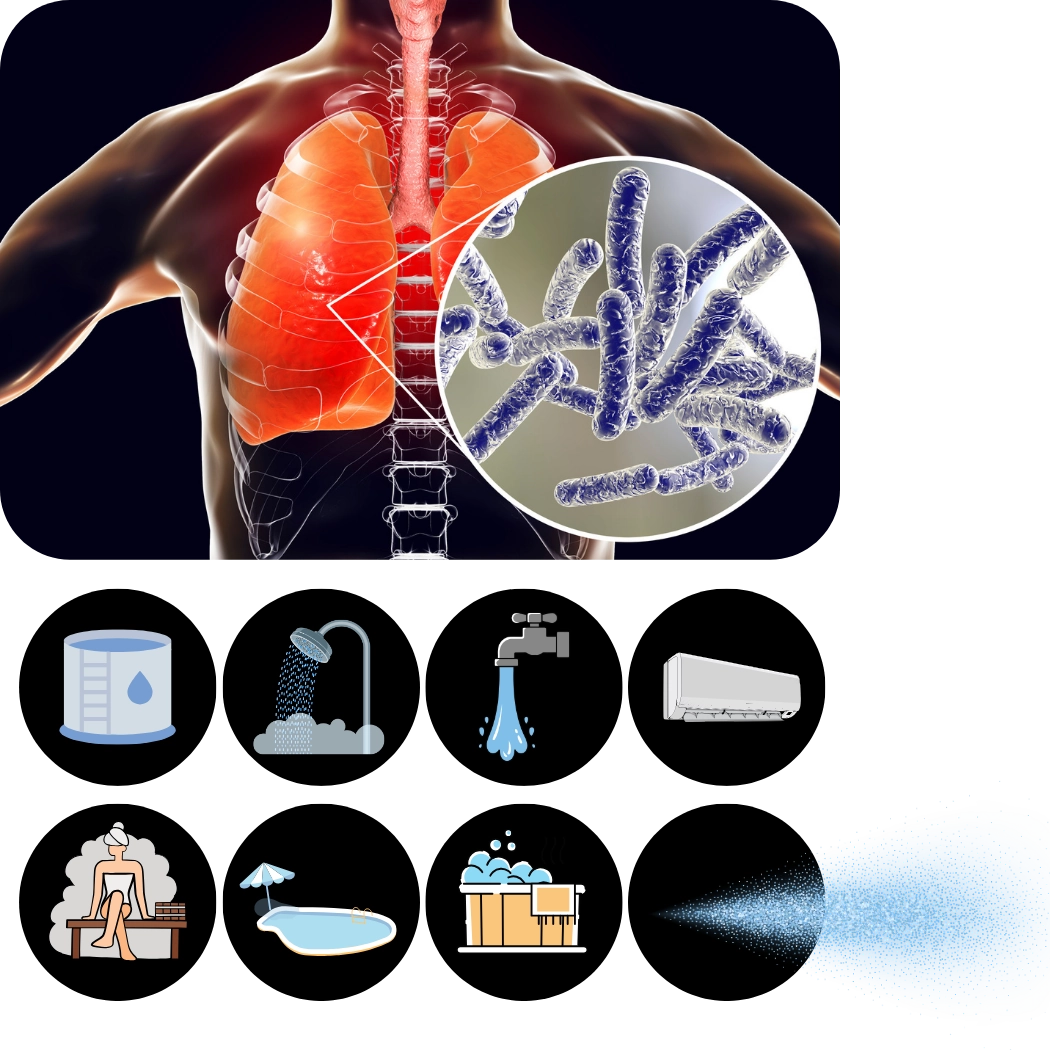
Legionella is a naturally occurring bacterium found in rivers, lakes and reservoirs. In these natural environments, the bacteria rarely pose a health risk. Problems arise when Legionella bacteria multiply in artificial water systems where conditions allow them to grow.
Common places where Legionella in water can develop include:
- Hot and cold water systems
- Cooling towers and water-based air conditioning systems
- Water storage tanks
- Showers and taps
- Spa pools and hot tubs
- Decorative fountains
- Misting systems
The bacteria thrive in water temperatures between 20°C and 45°C, particularly where water becomes stagnant or where biofilm, limescale or sediment is present.
What Causes Legionnaires' Disease?
People develop Legionnaires' disease by breathing in tiny airborne water droplets that contain Legionella bacteria. These droplets are known as aerosols and are commonly produced by showers, cooling towers, fountains and similar water systems.
Contrary to what some people believe, Legionnaires' disease is not usually caught by drinking contaminated water. In almost all cases, people become infected by inhaling contaminated water droplets. In rare cases, infection can occur if contaminated water accidentally enters the lungs through choking or aspiration.
Symptoms of Legionnaires' disease
Symptoms of Legionnaires' disease usually develop between 2 and 10 days after exposure to the bacteria.
Common symptoms include:
- A high temperature (fever)
- Chills
- A persistent cough
- Shortness of breath
- Muscle aches
- Headaches
- Tiredness
- Confusion (particularly in older adults)
- Chest pain
- Gastrointestinal symptoms such as diarrhoea, nausea or vomiting
If left untreated, Legionnaires' disease can lead to serious complications, including pneumonia and respiratory failure. Anyone experiencing symptoms after potential exposure to contaminated water should seek medical advice promptly.
Who Is Most at Risk?
While anyone can become infected, certain groups are more vulnerable to developing serious illness.
Higher-risk individuals include:
- Adults aged over 50
- Smokers and former smokers
- People with chronic lung disease
- Those with weakened immune systems
- Individuals with long-term health conditions such as diabetes or kidney disease
For these groups, exposure to Legionella bacteria can result in severe pneumonia requiring hospital treatment.
Legionella in Water: Why Prevention Matters
The presence of Legionella in water does not automatically mean there is a health risk. The danger arises when bacteria multiply and contaminated water becomes airborne.
This is why effective water hygiene management is so important. Businesses, landlords and organisations have legal responsibilities to identify and control the risks associated with Legionella bacteria.
Monitoring and Control
Routine monitoring should confirm that the control measures identified by the risk assessment are working effectively. For most hot and cold water systems, this principally involves temperature checks, inspections, flushing, cleaning, maintenance and record keeping.
Routine microbiological testing for Legionella is not normally required for ordinary enclosed hot and cold water systems. Sampling may be appropriate where the risk assessment identifies a need, where there is doubt about the effectiveness of the control regime, or where recommended temperatures or disinfectant concentrations are not being consistently achieved.
Open systems, including cooling towers, evaporative condensers and spa pools, require a different monitoring regime and should normally undergo routine Legionella testing at least quarterly. Where sampling is undertaken, samples should be analysed by a suitably UKAS-accredited laboratory.
Legionella risk assessments
Carrying out a Legionella risk assessment is the responsibility of the employer, landlord or other person in control of the premises. The assessment should be completed by someone who is competent through appropriate training, knowledge, experience and understanding of the water system.
This may be a competent person within the organisation or an external specialist. Appointing a consultant does not transfer the dutyholder's legal responsibility for managing the risk.
A competent assessor will review several factors that could increase the risk of Legionella growth and exposure, including:
- Water temperatures throughout the system
- Water storage tanks and calorifiers
- Pipework design, condition and any dead legs
- Areas of low water use or water stagnation
- Maintenance, cleaning and inspection procedures
- Potential sources of aerosol generation, such as showers, taps and spray outlets
The findings of the risk assessment should be used to develop and implement appropriate control measures. Risk assessments should also be reviewed regularly and whenever there are significant changes to the water system, its use or occupancy, or if there is reason to believe the existing assessment is no longer valid.
Legionella Testing
Routine monitoring may also include Legionella testing, particularly where a risk assessment identifies higher-risk systems.
Legionnaires testing or a Legionella bacteria test involves analysing water samples to determine whether Legionella bacteria are present.
Some organisations also consider using Legionella test kits or Legionnaires test kit products. While these may provide preliminary information, laboratory testing carried out by accredited specialists remains the most reliable method of detecting Legionella bacteria and should form part of a wider water management programme.
How to Prevent Legionnaires' Disease
Preventing Legionnaires' disease requires ongoing management rather than a one-off inspection.
Good practice includes:
✓ Control water temperatures
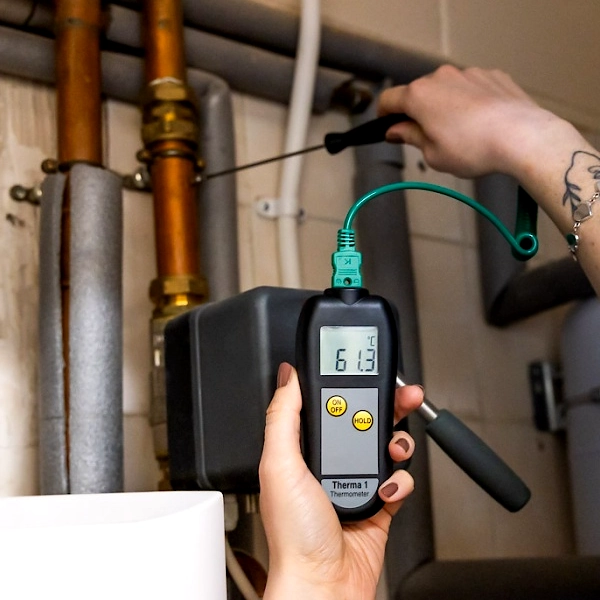
Temperature control is one of the most effective ways to reduce the risk of Legionella growth in hot and cold water systems. Where temperature is used as the primary control measure:
- Cold water should, where possible, be maintained below 20°C.
- Hot water should be stored at 60°C or above.
- Hot water should reach at least 50°C within one minute at outlets.
- In healthcare premises, hot water should normally reach at least 55°C within one minute.
Suitable measures may also be needed to control the risk of scalding, particularly in healthcare settings, care homes and other premises used by vulnerable people. Thermostatic mixing valves (TMVs) can reduce the temperature at the point of use without lowering the temperature throughout the wider hot water system.
✓ Prevent Water Stagnation
Unused pipework and little-used outlets allow bacteria to multiply. Regular flushing and removing redundant pipework help minimise risk.
✓ Clean and Maintain Water Systems
Storage tanks, showers, cooling towers and other water systems should be inspected, cleaned and maintained regularly to prevent the build-up of biofilm, sediment and scale.
✓ Monitor Water Systems
Routine monitoring, inspections, record keeping and, where appropriate, Legionella testing help ensure that control measures remain effective
✓ Review Risk Assessments Regularly
A Legionella risk assessment should be reviewed whenever water systems change or building usage alters significantly.
Legionella Treatment and Legionnaires' Disease Treatment
When people search for Legionella treatment, they are usually referring to two different things. One is treating the bacteria within a water system, and the other is treating the illness itself.
For water systems, treatment may include cleaning, disinfection, temperature control and other remedial actions to eliminate bacterial growth.
Legionnaires' disease treatment involves antibiotics prescribed by a medical professional. Early diagnosis and prompt treatment significantly improve recovery, although severe cases may require hospital care.
Find your perfect product
Compare Our Temperature Measurement Range
| Legionella Temperature Testing Kit Comparison |
| Features |
Dilog DLLEG1 |
Martindale THERMOKITLGN |
Testo 915i Kit |
TPI 343 PLUS |
TPI SP341LK |
ETI 860-885 |
Kewtech L8 Kit |
| Thermometer Base Model |
Dilog DL7101 |
Martindale DT173 |
Testo 915i Handle |
TPI 343 |
TPI SP341 |
ETI Therma 1 |
Kewtech KEW301 |
| Channel Input Type |
Dual K-Type |
Single K-Type |
Single Lockable K-Type |
Dual K-Type |
Single K-Type Sub-mini |
Single K-Type |
Dual K-Type |
| Local Display |
Backlit LCD |
3½ digit LCD |
None (App Only) |
Dual LCD |
None (App Only) |
12mm LCD |
Dual LCD |
| Measurement Range |
−50°C to 1300°C |
−200°C to 1372°C |
−50°C to 400°C |
−50°C to 1350°C |
−50°C to 1350°C |
−99.9°C to 299.9°C |
−200°C to 1370°C |
| Resolution |
0.1°C or 1°C |
0.1°C up to 199.9°C |
0.1°C |
0.1°C up to 999.9°C |
0.1°C |
0.1°C & 1°C |
0.1°C & 1°C |
| Instrument Body Accuracy |
±0.5% rdg + 1°C |
±0.1% rdg + 1°C / ±0.1% rdg + 2°C |
±1.0°C (−50 to 100°C) |
±0.3% rdg + 1°C |
±0.3% rdg + 1°C |
±0.4°C ± 0.1% |
±0.3% rdg +1°C / ±0.5% rdg +1°C |
| Interface Connectivity |
Local interface |
Local interface |
Bluetooth 4.2 (100m) |
Local interface |
Bluetooth 4.2 (100m) |
Local interface |
Local interface |
| Power Source |
9V PP3 Block |
4× AAA Batteries |
3× AAA Batteries |
9V Block |
3× AAA Batteries |
3× AAA Batteries |
9V Block |
| Battery Operating Life |
~100 Hours |
~200 Hours |
~150 Hours |
~200 Hours |
~75 Hours |
10,000 Hours |
~100 Hours |
| Ingress Protection (IP) |
Not specified |
Not Specified |
IP20 (IP40 with probe) |
Not Specified |
IP30 |
IP64 (with cover) |
Not Specified |
| Main Handheld Dimensions |
165 × 76 × 44mm |
160 × 83 × 38mm |
129 × 31 × 31mm |
40 × 190 × 65mm |
155 × 33 × 20mm |
25 × 56 × 128mm |
184 × 64 × 30mm |
| Unit Weight |
403g |
~240g |
88g (Handle only) |
315g |
97.5g |
130g |
~210g |
| Warranty Term |
2 Years |
2 Years |
Not specified |
3 Years |
3 Years |
2 Years |
Not specified |
| Shop Products |
SHOP NOW
|
SHOP NOW
|
SHOP NOW
|
SHOP NOW
|
SHOP NOW
|
SHOP NOW
|
SHOP NOW
|
Compare the Sensor Packages Included
| Legionella Kit Sensor Package Comparison |
| Features |
Liquid/Immersion Sensor Package |
Surface/Contact Sensor Package |
Air/Gas Ambient Sensor Package |
Additional Thermocouples & Accessories |
| Dilog DLLEG1 |
KAL1 Air and Liquid Probe: K-Type, −50°C to 500°C limit. |
KSP2 Heavy Duty Surface Probe: K-Type contact plate, −50°C to 500°C limit. |
Handled via KAL1 multi-use probe. |
Two K-Type wire thermocouples, durable protective carry pouch. |
| Martindale THERMOKITLGN |
TT6K Penetration Probe: K-Type stainless steel needle for liquids. |
TT8K Surface Probe: K-Type contact head for flat surfaces. |
Handled via beaded probe. |
TT1P Type K PTFE-insulated bead thermocouple, protective rubber holster, hard carry case. |
| Testo 915i Kit |
Immersion/Penetration Probe: Class 1 K-Type, −50°C to 400°C, Ø3mm tip, t90 = 3s. |
Surface Probe: Class 1 K-Type, −50°C to 350°C, sprung thermocouple strip, Ø12mm tip, t90 = 3s. |
Air Probe: Class 1 K-Type, −50°C to 400°C, Ø4mm shaft, t90 = 60s. |
Testo Smart Case with rigid custom moulded inserts, calibration protocol. |
| TPI 343 Plus |
FK11M Immersion Probe: K-Type, −50°C to 250°C, 1m lead. |
CK11M Waterproof Surface Probe, CK21M Pipe Clamp Probe: Ø30mm max capacity, −50°C to 250°C. |
Two GK21M/GK11M Air (Beaded) Probes: Fibreglass insulation, −40°C to 510°C. |
Protective rubber boot, TPI A901 soft carry case. |
| TPI SP341LK |
FK13M Immersion/Penetration Probe: K-Type, −40°C to 850°C, 203mm × Ø3.75mm stem. |
CK15M Heavy Duty Surface Probe: K-Type, −40°C to 510°C, 203mm × Ø14mm stem. |
GK41M K-Type Sub-Mini Air Temperature Probe, −40°C to 204°C. |
Optional CK21M Type K pipe clamp probe, TPI A926 zipper carry case. |
| ETI 860-885 |
323-046 Waterproof Surface/Immersion Probe |
323-046 Waterproof Surface/Immersion Probe |
133-372 Heavy-Duty PFA Wire Probe |
ETI 830-037 Zip Pouch, calibration cert. |
| Kewtech L8 Kit |
REGV25 Liquid Probe |
REGV30 Surface Probe |
Handled via probes |
2x Additional K-Type thermocouples, EZYBAG |
Final Thoughts
Although Legionnaires' disease is uncommon, it can have serious consequences if water systems are not properly managed. Understanding the risks associated with Legionella bacteria, carrying out a suitable Legionella risk assessment, and implementing effective monitoring and maintenance procedures are the most effective ways to reduce the risk of infection.
Whether you are responsible for a commercial property, healthcare facility, educational establishment or residential building, proactive water hygiene management helps protect occupants, demonstrates legal compliance and reduces the likelihood of Legionella in water becoming a serious health risk.
❓ Frequently Asked Questions (FAQ)
Q1: Is Legionnaires' disease contagious?
A. Legionnaires’ disease is not generally spread from person to person. Infection is normally acquired by inhaling contaminated water droplets or, less commonly, by aspirating contaminated water into the lungs.
Q2: What is a Legionella risk assessment?
A. A Legionella risk assessment identifies potential risks within a water system and recommends measures to prevent the growth and spread of Legionella bacteria. It is an important part of managing water hygiene in commercial and residential buildings.
Q3: Is Legionella testing a legal requirement?
A. Routine Legionella testing is not always a legal requirement in the UK. However, duty holders must assess and manage the risk of Legionella bacteria. Testing may form part of an effective control programme where appropriate.
Q4: How can Legionnaires' disease be prevented?
A. Regular maintenance, temperature control, preventing water stagnation, and carrying out a suitable Legionella risk assessment are the most effective ways to reduce the risk of Legionnaires' disease.
Q5: Who is most at risk from Legionnaires' disease?
A. People over the age of 50, smokers, those with chronic lung conditions, and individuals with weakened immune systems are more likely to develop serious illness if exposed to Legionella bacteria.
For more detailed information on the legal responsibilities of employers, landlords and duty-holders, visit the HSE's guidance on Legionnaires' disease: What you must do.