Hydroelectric Power Plants: Essential Test Equipment for Hydro Power Plant Maintenance
Hydro energy is one of the world's most reliable sources of renewable electricity. From large hydroelectric dams to modern pumped storage schemes, hydro power plants play a vital role in delivering clean energy to homes, businesses, and industry.
While flowing water provides the energy source, reliable generation depends on the condition of the equipment inside the plant. Generators, transformers, switchgear, and hydropower turbines must all operate efficiently to keep electricity flowing to the grid.
Even minor faults can lead to costly downtime, lost generation, and expensive repairs. That is why engineers rely on specialist test equipment to identify problems early and maintain reliable operation.
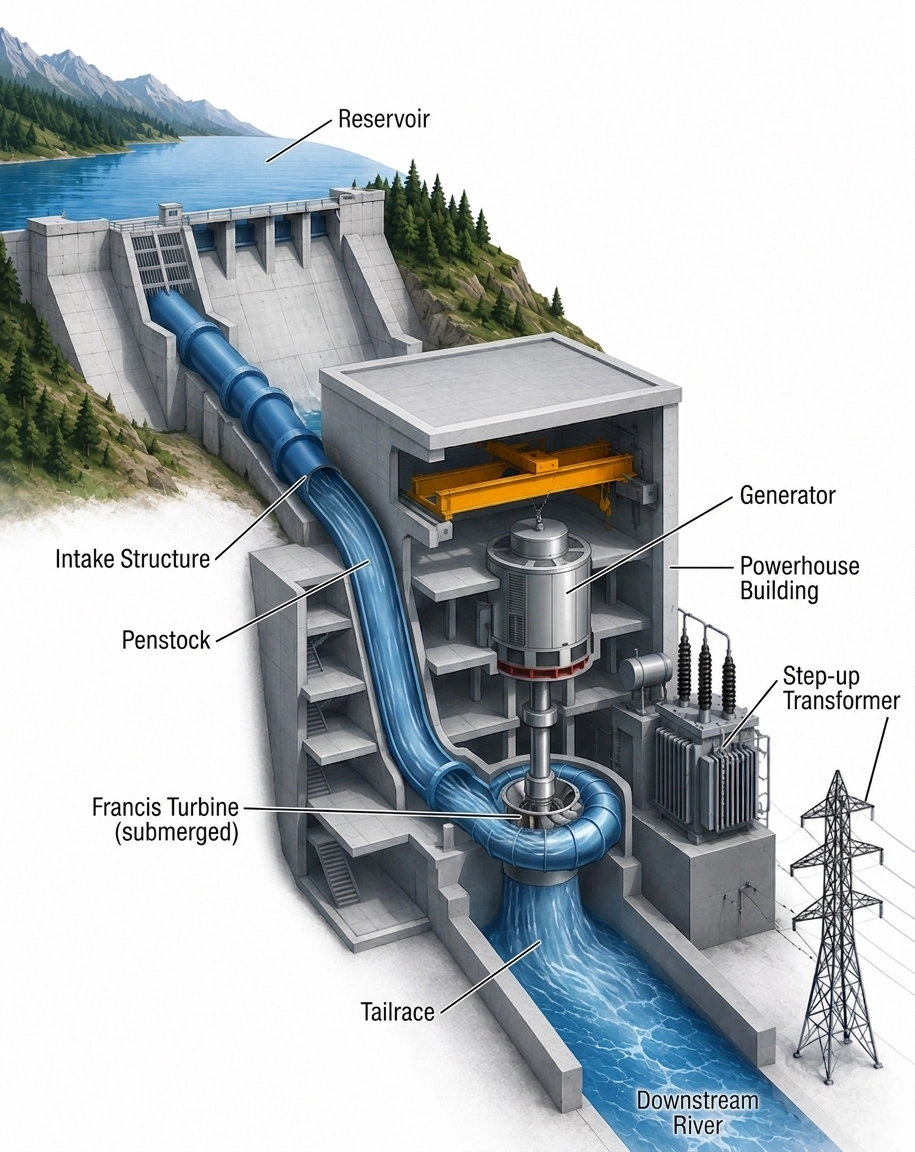
Why Maintenance Matters in a Hydro Power Plant
A hydro power plant operates in a challenging environment. Equipment is often exposed to moisture, vibration, temperature fluctuations, and continuous operation.
Over time, electrical insulation can deteriorate, mechanical components can wear, and connections can loosen. If these issues go undetected, they can affect performance and reduce the efficiency of hydro electricity power generation.
Many operators now use predictive maintenance strategies to monitor asset condition and identify faults before failures occur.
The benefits are clear:
- Reduced downtime
- Improved reliability
- Lower maintenance costs
- Longer equipment life
- Increased hydro energy production
- Improved operational safety

Essential Test Equipment Used in Hydroelectric Power Plants
Engineers working in hydroelectric power plants use a range of test and measurement instruments to keep assets operating safely and efficiently.
The most important categories include:
- Electrical testing equipment
- Thermal imaging cameras
- Power quality analysers
- Vibration monitoring tools
Together, these technologies provide a complete picture of equipment health and help prevent unexpected failures.
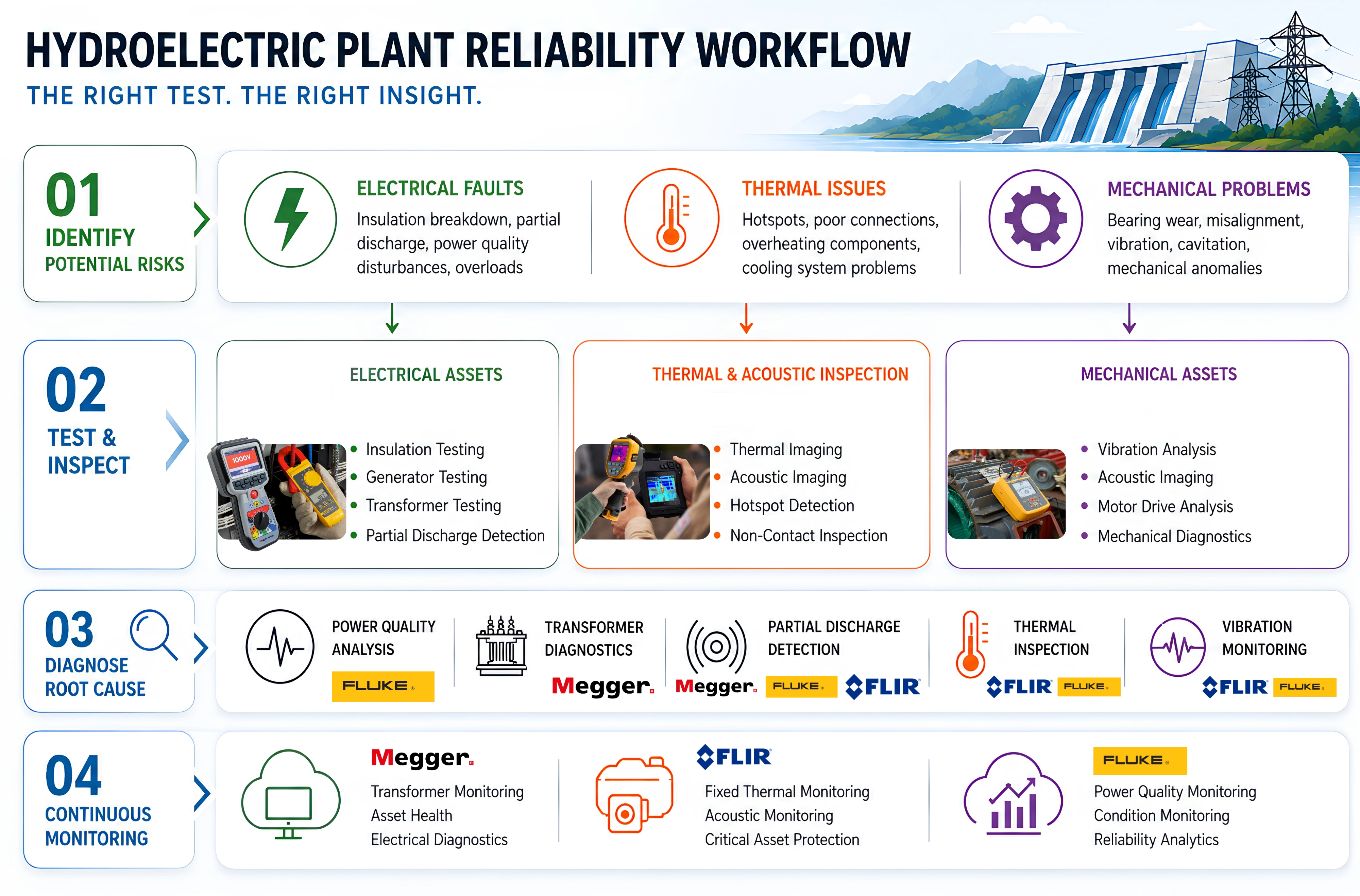
Electrical Testing
Electrical systems sit at the heart of every hydroelectric power station. Regular testing helps engineers assess the condition of critical assets and identify developing faults before they impact production.
Typical applications include:
Megger: Electrical Testing for Hydropower Facilities
Megger is widely recognised for its electrical testing and diagnostic solutions across the power generation sector.
Its equipment helps engineers evaluate generators, transformers, cables, and switchgear throughout hydroelectric power plants. By identifying issues such as insulation degradation and partial discharge activity, maintenance teams can make informed decisions and reduce the risk of unplanned outages.
For many hydro power plants, Megger equipment forms the foundation of a proactive maintenance programme.

Thermal Imaging
Many faults create heat before they become visible problems. Thermal imaging allows engineers to identify these issues quickly and safely.
Instead of shutting equipment down for inspection, maintenance teams can scan operating assets and identify hotspots in seconds.
Common inspection points include:
- Transformers
- Switchgear
- Electrical panels
- Bearings
- Cooling systems
- Generator connections
FLIR and FLUKE: Seeing Problems Before They Cause Failures
Both FLIR and FLUKE thermal imaging cameras have become valuable tools across the hydro energy sector.
By detecting abnormal temperatures, engineers can identify overheating connections, overloaded circuits, transformer hotspots, and developing mechanical faults before they result in equipment damage or costly downtime.
FLIR is widely recognised for its advanced thermal imaging and acoustic imaging technologies. Many hydro power plants use FLIR acoustic cameras to detect partial discharge and other hidden electrical issues that may not be visible during routine inspections.
FLUKE also offers a range of thermal imaging solutions that help maintenance teams monitor the condition of electrical and mechanical assets. FLUKE thermal imagers are commonly used to inspect switchgear, motors, generators, transformers, and cooling systems, enabling engineers to identify issues early and improve overall plant reliability.
Together, FLIR and FLUKE provide maintenance teams with powerful thermal inspection capabilities that support safer operations, reduce downtime, and improve hydroelectric power generation performance.
Looking for 24/7 thermal monitoring? Discover how fixed FLIR thermal cameras help identify issues before they become failures. Read the case study.
Monitoring Power Quality
Reliable hydro electricity power generation depends on stable electrical performance.
Issues such as voltage fluctuations, harmonics, and electrical disturbances can affect efficiency and place additional stress on equipment.
Power quality monitoring helps maintenance teams understand how electrical systems are performing and identify opportunities to improve efficiency.
FLUKE: Power Quality and Diagnostic Solutions
FLUKE provides a broad range of tools used throughout hydro power plants and renewable energy facilities.
Its portfolio includes:
- Power quality analysers
- Energy loggers
- Thermal imagers
- Acoustic imagers
- Electrical test instruments
These tools help engineers troubleshoot faults, analyse energy performance, and improve the reliability of hydroelectric power generation.

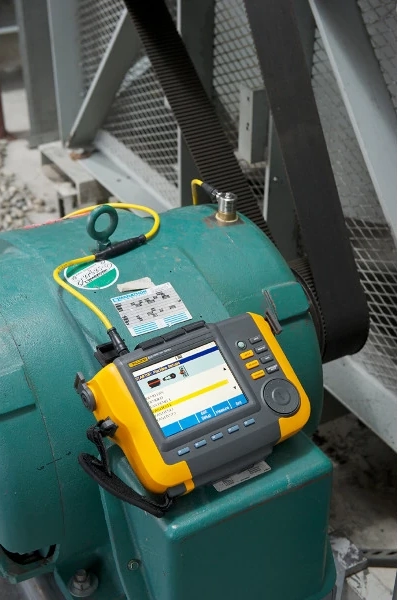
Vibration Monitoring for Hydropower Turbines
Hydropower turbines are among the most valuable assets in any hydroelectric power station.
Over time, vibration can indicate developing issues such as bearing wear, shaft misalignment, imbalance, or cavitation.
Monitoring vibration levels helps engineers identify these problems early and plan maintenance before a breakdown occurs.
The benefits include:
- Improved turbine reliability
- Reduced repair costs
- Longer equipment life
- Better efficiency
- Fewer unplanned outages
Building a Smarter Maintenance Strategy
The most successful hydroelectric power plants do not rely on a single inspection method.
Instead, they combine electrical testing, thermal imaging, power quality monitoring, and vibration analysis to create a complete maintenance strategy.
This approach helps operators:
- Increase hydro energy production
- Improve reliability
- Reduce maintenance costs
- Extend asset life
- Improve safety
- Support long-term operational performance
By combining technologies from Megger, FLIR, and FLUKE, engineers gain greater visibility into the condition of their critical assets.
Supporting the Future of Hydro Energy
As demand for renewable energy continues to grow, hydro power plants must operate as efficiently and reliably as possible.
Advanced testing and diagnostic equipment helps engineers identify faults earlier, improve maintenance planning, and maximise equipment performance.
Whether monitoring generators, assessing transformer health, inspecting switchgear, or analysing hydropower turbines, the right tools can make a significant difference.
For operators looking to improve reliability and maximise hydroelectric power generation, investing in high-quality test equipment is an essential part of a modern maintenance strategy.
❓ Frequently Asked Questions (FAQ)
Q1: What equipment is used in a hydroelectric power plant?
A. A hydroelectric power plant uses generators, transformers, turbines, switchgear, control systems, and monitoring equipment to convert the energy of water into electricity.
Q2: What test equipment do engineers use in a hydro power plant?
A. Engineers commonly use insulation testers, thermal imaging cameras, power quality analysers, vibration monitoring equipment, and acoustic imagers to assess equipment condition.
Q3: Why is maintenance important for hydro energy facilities?
A. Regular maintenance helps prevent unexpected failures, improves reliability, extends equipment life, and supports efficient hydro electricity power generation.
Q4: How do hydroelectric power plants reduce downtime?
A. Many facilities use predictive maintenance techniques that identify developing faults before they cause equipment failures or interruptions to power generation.