Socket & See CB400 Calibration Checkbox
Non-Trip Calibration Checkbox for Electrical Test Instruments
The Socket & See CB400 Calibration Checkbox is designed to help electrical professionals regularly check and validate test instruments between formal calibrations.
Suitable for checking insulation resistance, continuity, earth fault loop impedance and RCD test instruments, the CB400 provides multiple known check points within one robust unit. This makes it a practical way to monitor instrument performance and identify potential issues before the next scheduled calibration.
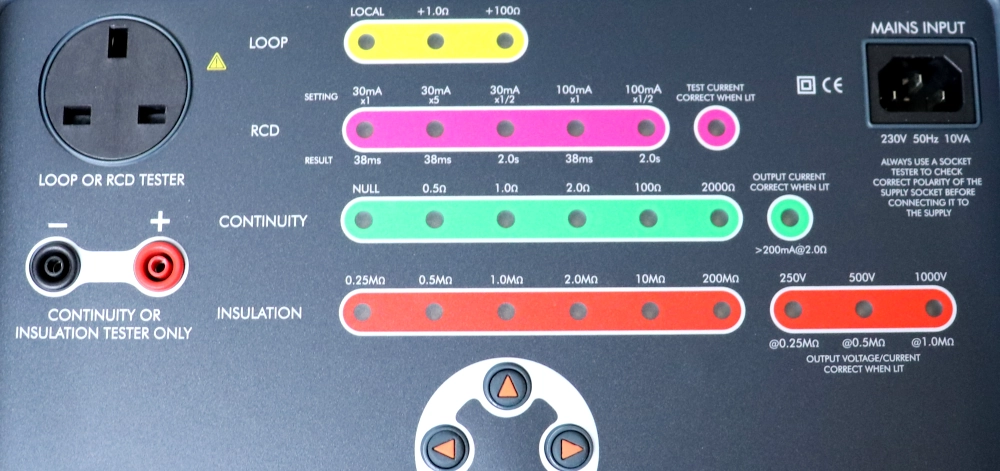
For insulation resistance testing, the Socket and See CB400 provides six check levels covering 0.25MΩ to 200MΩ, with testing supported at voltages up to 1000V. It also provides three over-voltage check bands for 250V, 500V and 1000V settings.
Continuity testers can be checked at five resistance levels, while a dedicated null facility allows lead resistance to be removed. For earth fault loop impedance instruments, three checks are available: local loop impedance, local plus an additional 1Ω and local plus an additional 100Ω.
The CB400 also provides five RCD checks covering 30mA and 100mA RCDs, including x1, x5 and x½ test points as applicable. A non-trip testing method makes it possible to assess RCD tester performance without operating the installation RCD during the check.
All of this is housed inside a tough, drop-proof and watertight case, with calibration documentation supplied.
Request a competitive quote for the Socket & See CB400 today – a comprehensive Calibration Checkbox for routinely validating electrical test instruments between calibrations.
Socket & See CB400 Key Features:
- Helps validate test instruments between calibrations
- Checks insulation resistance, continuity, loop and RCD test instruments
- Six insulation check levels from 0.25MΩ to 200MΩ
- Supports insulation checks at up to 1000V
- Null facility for removing test lead resistance
- Five continuity check levels
- Three earth fault loop impedance check levels
- Five RCD checks covering 30mA and 100mA RCDs
- Non-trip RCD testing method
- Checks RCD over-current test
- Current break time check of 38ms ±1ms
- LED indication for current above 200mA at 2Ω
- Tough, drop-proof, watertight case
- Calibration documentation included
- Complies with IEC EN 61010
▶ Socket & See CB400 Features & Demonstration:
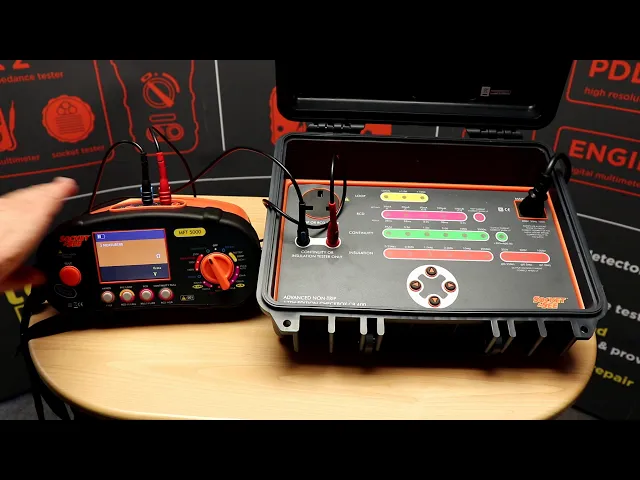
Why Choose the Socket & See CB400?
The Socket & See CB400 brings several test-instrument checking functions together in one unit, making it useful for businesses and electrical professionals who want to monitor the ongoing performance of their equipment.
Rather than waiting until the next calibration interval to identify a potential instrument problem, the CB400 provides known resistance and test points that can be used for regular comparison checks.
Its wide range of insulation, continuity, loop and RCD check points also means one electrical tester calibration check box can be used with several different types of electrical test equipment.
The unit is supplied in a durable protective case measuring 328 x 230 x 125mm and weighs 2.42kg.
Specifications:
| Features | |
| Insulation Check Levels | 0.25MΩ / 0.5MΩ / 1.0MΩ / 2.0MΩ / 10MΩ / 200MΩ |
| Insulation Voltage | Up to 1000V |
| Insulation Accuracy | 1% up to 10MΩ; 2% at 200MΩ |
| Over-Voltage Check Bands | 250V / 500V / 1000V |
| Continuity Null | 1% ±20mΩ, 1A |
| Continuity Check Levels | 0.5Ω / 1.0Ω / 2.0Ω / 100Ω / 2000Ω |
| Loop Checks | Local / Additional 1Ω / Additional 100Ω |
| RCD Checks | 30mA x1 / 30mA x5 / 30mA x½ / 100mA x1 / 100mA x½ |
| RCD Accuracy | 5% |
| Current Break Time | 38ms ±1ms |
| Current Accuracy Indication | LED for >200mA @ 2Ω |
| Safety | IEC EN 61010 |
| Case Size | 328 x 230 x 125mm |
| Weight | 2.42kg |
| Calibration Documentation | Included |
What Comes with the CB400?
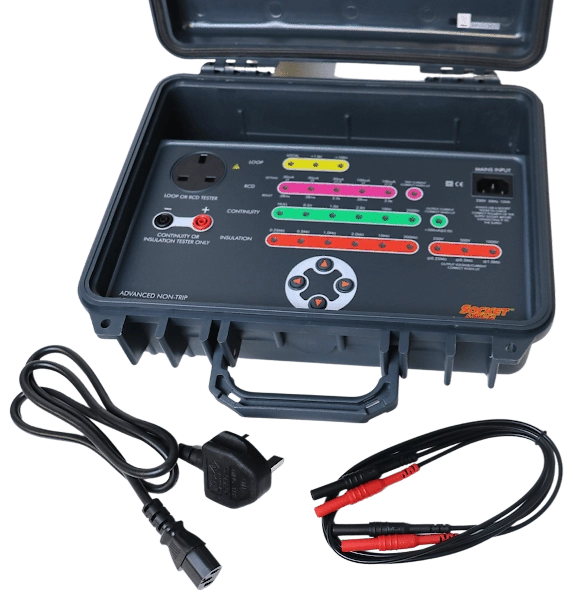
- Socket & See CB400 Calibration Checkbox (housed in a hard case)
- IECP UKA 13A Plug to IEC Female Connector
- Pair of 4mm Test Leads
- Calibration Certificate
❓ Frequently Asked Questions (FAQ)
Q1: What is the Socket & See CB400 used for?
A. The Socket & See CB400 Calibration Checkbox is used to check and validate the performance of electrical test instruments between formal calibrations, including insulation resistance, continuity, loop and RCD testers.
Q2: What insulation resistance check points does the CB400 provide?
A. The CB400 provides six insulation resistance check levels: 0.25MΩ, 0.5MΩ, 1MΩ, 2MΩ, 10MΩ and 200MΩ, with testing supported up to 1000V.
Q3: Can the CB400 check continuity testers?
A. Yes. It provides a null facility plus continuity check points at 0.5Ω, 1Ω, 2Ω, 100Ω and 2000Ω.
Q4: Can the CB400 check loop testers?
A. Yes. The CB400 provides local loop checking as well as checks incorporating an additional 1Ω or 100Ω.
Q5: Can the CB400 check RCD testers?
A. Yes. It provides five checks covering 30mA and 100mA RCD test settings, including x1, x5 and x½ test points where applicable.
Q6: Does the CB400 replace formal calibration?
A. The datasheet describes the CB400 as a device for continually validating instruments between calibrations. It is therefore best positioned as an interim instrument-checking solution rather than a replacement for scheduled calibration.