🔌 The Best EVSE Testing Equipment in the UK (2026): Future-Proof Solutions for EV Charging Infrastructure
The rapid growth of electric vehicles (EVs) is transforming the way electrical contractors approach installation and testing.
From domestic wallboxes to large-scale commercial sites, modern EV charging stations are more advanced than ever. With the introduction of the 18th Edition Wiring Regulations Amendment 4, testing requirements are evolving to reflect smarter systems, bidirectional charging, and increased safety expectations.
Choosing the right EVSE testing solution is no longer just about compliance - it’s about investing in future-proof test equipment that supports modern charging infrastructure, high-power DC systems, and scalable team workflows.
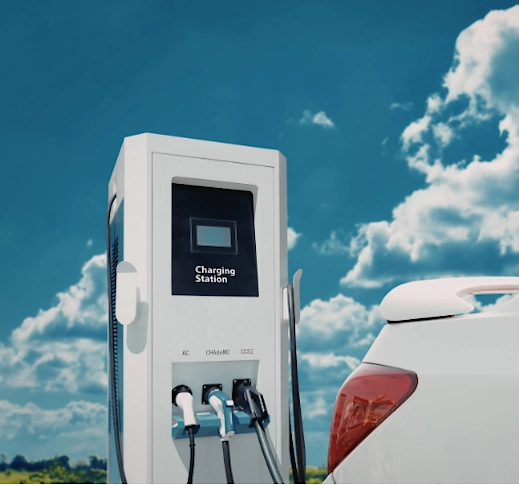
Why Is EVSE Testing Changing?
Historically, EVSE testing focused on basic AC checks and installation safety.
Today, the demands are much higher.
4 Modern electric vehicle supply equipment requirements:
- Advanced electrical test procedures
- Accurate electrical safety tests
- Support for high-power charging systems
- Compatibility with smart and networked charging solutions
The industry has shifted from simple compliance to full system validation and performance testing
📊 EVSE Tester Comparison (UK Market)
Here’s a practical comparison of the most relevant EV charger testing kits available today, mapped by their unique strengths and reporting capabilities:
| Product |
Setup Type |
Charging Types Tested |
Works Without a Separate MFT? |
Why Choose this Model? (USP) |
Reporting Options |
Future-Proof Rating |
Typical Application |
| FLUKE FEV300 |
Adapter |
AC charging only |
✗ |
Rugged Reliability: The industry standard for build quality and team-wide durability. |
Via MFT storage / Manual |
★★★☆☆ |
Core EV testing |
| Megger EVCA210 |
Adapter |
AC charging only |
✗ |
Intuitive Ergonomics: Best-in-class interface for engineers already using CertSuite. |
CertSuite / MFT sync |
★★★☆☆ |
Core EV testing |
| Kewtech KEWEVSE |
Adapter |
AC charging only |
✗ |
Mobile Efficiency: Ultra-compact and works seamlessly with the KEWPAT App. |
KEWPAT App (Digital) |
★★★☆☆ |
Domestic installations |
| FLUKE FEV350 |
Analyser |
AC charging only |
✓ |
Streamlined Workflow: All-in-one testing that syncs directly with TruTest™ software. |
TruTest™ Data Export |
★★★★☆ |
Professional auditing |
| Metrel A1632 |
Analyser |
AC charging (Expandable) |
✓ |
Automated Compliance: Features Bluetooth Auto-Sequencing via MESM software. |
Full MESM Database |
★★★★☆ |
Complex diagnostics |
| FLUKE FEV500 |
Analyser |
DC fast charging |
✓ |
Infrastructure Ready: The elite choice for DC Fast Charging and CCS protocol analysis. |
Advanced Asset Management |
★★★★★ |
Commercial & DC Fast-Charging |
4 Key Features...
...That Make EV Test Equipment Future-Proof
1) AC vs DC Testing Capability
Most EV charger testing equipment today is designed for AC installations such as homes and workplaces.
However, the UK market is rapidly expanding into 3 areas:
- Public charging infrastructure
- Fleet depots
- Motorway DC fast charging sites
Tools like the FLUKE FEV500 are specifically designed for high-power DC charging systems, making them essential for next-generation installations.
2) Scalability for Teams
For growing businesses, your EVSE testing solution must scale across multiple engineers.
The best systems offer these 3 features:
- Consistent test capabilities
- Standardised workflows
- Easier training and onboarding
This ensures consistent electrical test procedures across your team.
3) Reporting Software and Certification
Modern EVSE testing doesn’t stop at the test - documentation is critical.
Good test equipment should support these 3 things:
- Digital certification
- Job reporting
- Workflow integration
Leading platforms:
METREL → Guided Workflows: Powerful "tree-style" planning and automated test sequences.
FLUKE → Wireless Connectivity: Real-time data sharing across a massive range of connected tools.
MEGGER → Cloud Certification: Live, multi-user syncing via their dedicated CertSuite platform.
KEWTECH → Direct Reporting: Fast hardware-to-PDF data transfer and bundled compliance software.
Reporting is essential for scaling your business and winning larger contracts.
4) Safety and High-Power System Testing
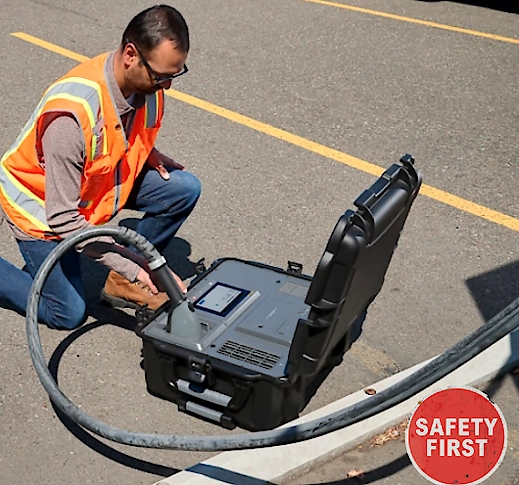
As EV charging systems increase in output, electrical safety tests become more critical than ever.
Modern EV charging equipment - particularly in commercial and public environments... involves these 3 elements:
- High-current operation
- Rapid DC fast charging systems
- More complex protection requirements
Advanced EVSE testing equipment must be capable of accurately validating these high-power DC systems, ensuring safe operation under real-world conditions.
Key EVSE Tests Explained (CP, PP, RCD and Loop Testing)
To properly understand modern EVSE testing equipment, it’s important to go beyond basic checks and look at the core tests that ensure safe operation.
💡 Pro-Tip: Open PEN Safety
Most UK installs now omit earth rods. Use a tester that simulates a "Loss of Neutral" to verify the charger’s internal protection—this is a non-negotiable safety check under Amendment 4 (2026).
Control Pilot (CP) – Charger to Vehicle Communication
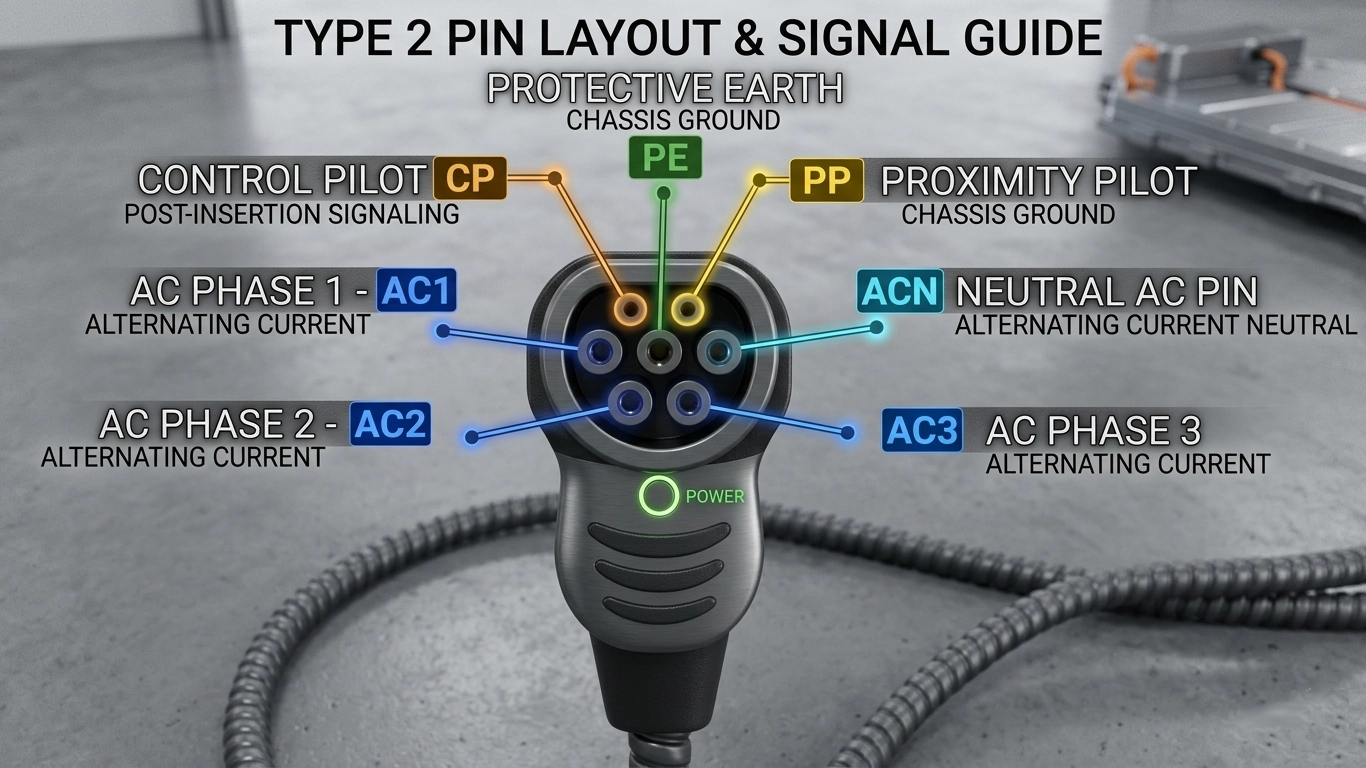
The Control Pilot (CP) signal manages communication between the EV charger and the vehicle. It:
- Controls charging states
- Regulates current
- Ensures safe operation
Accurate CP simulation is essential for proper EVSE testing
Proximity Pilot (PP) – Cable Safety and Detection
The Proximity Pilot (PP) ensures 3 things:
- Cable detection
- Current rating identification
- Safe disconnection
Critical for safe electric vehicle charging
RCD Testing – Protection Against Electric Shock
Residual Current Device testing ensures protection from electric shocks and verifies correct disconnection times.
It is required under the 18th Edition Wiring Regulations Amendment 4.
Essential for all compliant electrical safety tests
💡 Pro-Tip: Avoid RCD Blinding
Standard Type A RCDs can fail if DC leakage exceeds 6mA. Ensure your tester performs a 6mA DC Ramp Test; if the charger doesn't trip correctly, the property's entire shock protection could be compromised.
Loop Testing – Fault Protection Verification
A loop test ensures:
- Fault currents flow correctly
- Protective devices trip quickly
Critical for safe operation of EV charging stations
Performance Testing in Modern Charging Infrastructure
Advanced EVSE testing now includes:
- Load simulation
- Full vehicle testing scenarios
- Smart charger validation
This is where high-end testing kits outperform basic adapters.
Best EVSE Testing Solutions by Use Case
🏠 Domestic Installers
✔ Cost-effective
✔ Ideal for everyday EV charger installs
❌ Limited scalability
🏢 Commercial and Growing Businesses
✔ Advanced test capabilities
✔ Better diagnostics
✔ Supports complex charging solutions
💡 Pro-Tip: Beyond Pass/Fail
On commercial sites, "faulty" chargers are often just communication errors. Use an analyser to view the CP Waveform; seeing the digital "handshake" prevents unnecessary hardware replacements and saves hours in diagnostics.
⚡ Future Infrastructure and DC Charging
✔ Designed for DC fast charging
✔ Advanced diagnostics
✔ Future-proof investment
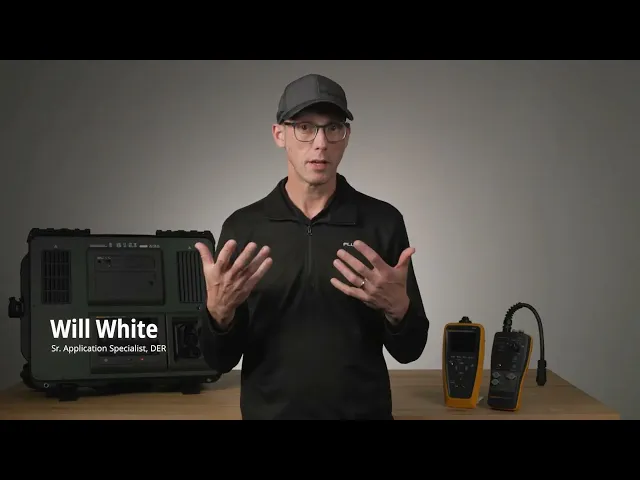
▶ Will White explains: Why is DC fast charging testing becoming so important?
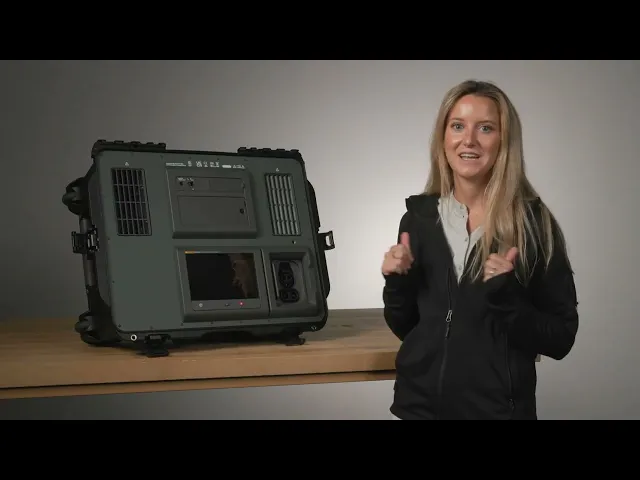
▶ Alex Thompson explains: Why is the FLUKE FEV500 such a big deal for EV technicians?
💡 Pro-Tip: High-Power DC Readiness
As the UK scales to 1000V DC hubs, you are testing protocols (ISO 15118) as much as hardware. Ensure your kit supports digital handshake validation for "Plug & Charge" infrastructure to remain future-proof.
The Takeaway
The UK EV market is evolving rapidly, and testing requirements are changing just as quickly.
We're already seeing 3 things:
- Growth in high-power DC charging infrastructure
- Increased demand for advanced EVSE testing
- Greater reliance on reporting and compliance
“The future of EV testing belongs to advanced analysers, DC-capable tools, and scalable workflows. Choosing the right EVSE testing equipment today ensures your business is ready for tomorrow’s high-power, complex charging infrastructure.”
🔎 Looking for EVSE Testing Equipment?
Explore a wide range of EV charger testing kits designed for modern EV charging stations, from entry-level adapters to advanced DC analysers.
❓ Frequently Asked Questions (FAQ)
Q1: What is EVSE testing?
A. EVSE testing is the process of verifying that electric vehicle supply equipment is safe, compliant, and operating correctly. This includes communication checks, protection testing, and performance validation.
Q2: What is the difference between AC and DC EV charger testing?
A. AC EV charger testing typically covers domestic and workplace installations, while DC EV charger testing is used for rapid charging infrastructure such as public charging hubs and fleet depots.
Q3: Why is reporting software important for EVSE testing?
A. Reporting software helps engineers produce digital certification, maintain consistent job records, and improve workflow efficiency, which is especially important for growing teams and larger contracts.
Q4: What do CP and PP mean in EV charging?
A. CP stands for Control Pilot and manages communication between the charger and the vehicle. PP stands for Proximity Pilot and is used for cable detection and current rating identification.
Q5: Which EVSE tester is the most future-proof?
A. The FLUKE FEV500 is the most future-proof option in this comparison because it supports advanced diagnostics and DC fast charging applications.
VIEW ALL EV CHARGE POINT TESTERS