Data Center Maintenance Checklist & Guide
Data centres are the backbone of modern business. With over 500 data centres across the UK, they support cloud platforms and financial systems.
Even brief interruptions can have serious consequences. Maintaining uptime requires a proactive approach, combining regular inspections, the right test equipment, and strong safety practices. Effective data centre maintenance is essential to ensure reliability and long-term performance.
The 9 core maintenance pillars:
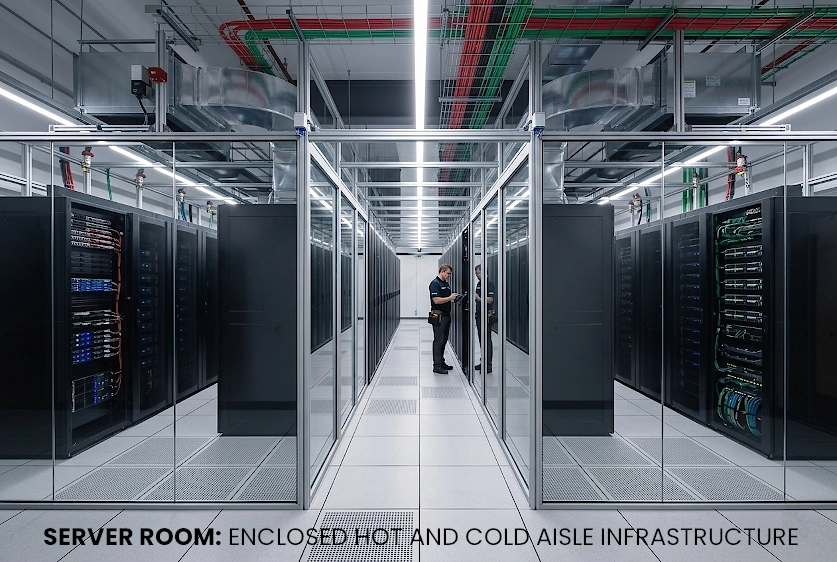
1. Servers (the "Purpose" of the Data Centre)
Supporting Data Centre Infrastructure:
2. Facility cooling systems (airflow and temperature control)
3. Connectivity (cables and systems)
4. Water systems (cooling support)
5. Power (UPS and generators)
6. Substation (grid interface, switchgear, panels and distribution boards)
7. Monitoring (systems and environment)
8. Fire alarms and associated safety measures
9. Security (physical infrastructure)
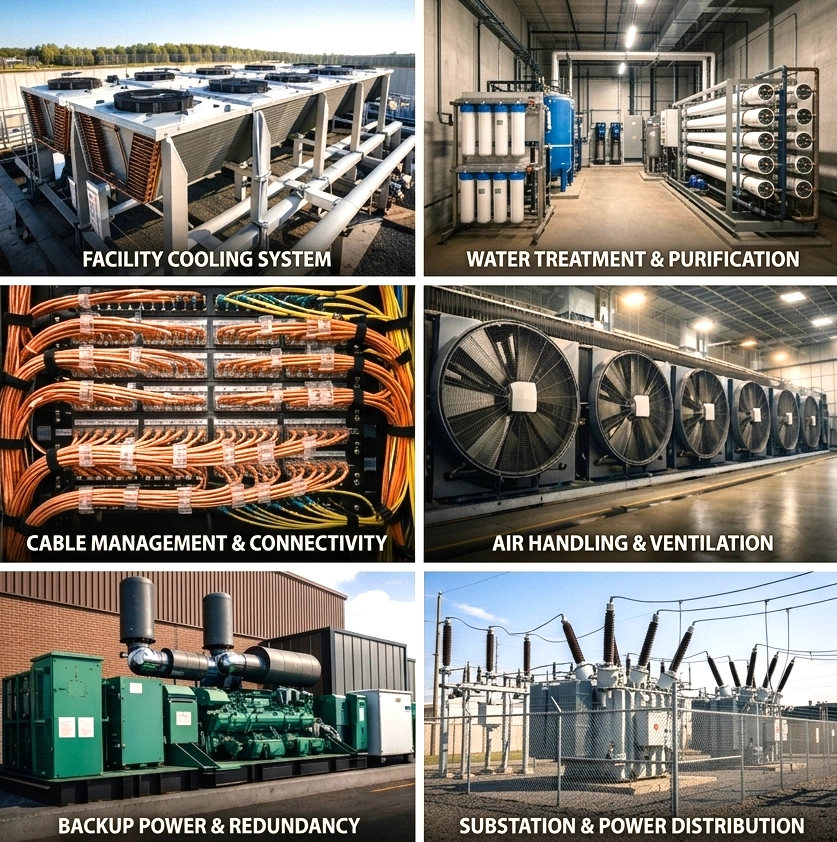
GRID → SUBSTATION → SWITCHGEAR → UPS → DISTRIBUTION → SERVERS
Supercharge Your Capabilities with Acutest’s Test Equipment Portfolio:
🔍 Thermal Imaging for Early Fault Detection
Many faults begin as small, invisible issues, such as overheating connections, poor airflow, or failing components. Handheld Thermal Cameras allow engineers to quickly scan critical infrastructure and identify these problems early.
Typical inspection areas include:
- Electrical panels and switchgear
- UPS systems and battery banks
- Power distribution units (PDUs)
- Server racks and cabling
- Cooling and HVAC systems
Technicians often use tools such as FLIR Handheld Thermal Cameras or FLUKE Handheld Thermal Cameras during routine inspection rounds to build a clear thermal picture of system performance.
However, inspecting live equipment introduces risk. Arc flash incidents, responsible for a large proportion of electrical injuries, can reach temperatures of up to 20,000°C, posing serious danger to both personnel and equipment.
To reduce this risk, many facilities install Infrared (IR) Windows, allowing inspections to be carried out safely without removing panel covers.
🔍 Technical Note: Safety First (EAWR & BS 7671)
In the UK, electrical safety is governed by the Electricity at Work Regulations (EAWR) 1989. Using IR windows supports "safe systems of work" by allowing inspections without exposing live parts. This aligns with BS 7671 (IET Wiring Regulations) and supports duty holders in meeting their legal obligations to prevent danger while maintaining "continuity of supply."
⚡ Power Quality & Energy Monitoring
Reliable power is critical in any data centre. Even small disturbances such as harmonics, voltage dips, or transient spikes can impact sensitive equipment.
Engineers use tools such as the Chauvin Arnoux PEL113 Power Logger, FLUKE 1736/1738 Power Loggers, and Chauvin Arnoux Qualistar+ Analysers (CA8336 / CA8345) to:
- Monitor load balance and energy consumption
- Identify inefficiencies and overloads
- Capture transient events and disturbances
- Support capacity planning
These tools provide the visibility needed to maintain stable and efficient power across the facility, while also helping organisations better understand and manage data center electricity consumption.
🔌 FINAL DISTRIBUTION & RACK-LEVEL VERIFICATION
At the final point of supply, tools such as the Socket & See Data Centre Kit (SOKDC32KIT) are used to quickly verify socket wiring, polarity, and earth integrity.
Commonly used on rack PDUs, IEC outlets, and during commissioning or fault finding, they help ensure connections are correct before equipment is energised - preventing avoidable faults and damage.
🔍 Compliance Note: Beyond PUE (G5/5 Compliance)
While PUE (Power Usage Effectiveness) is the go-to efficiency metric, UK engineers must also monitor THD (Total Harmonic Distortion) to help ensure compliance with ENA Engineering Recommendation G5/5. Excessive harmonics from UPS systems and server power supplies can cause overheating in neutral conductors and "nuisance tripping" of sensitive protection relays.
🔋 UPS & Battery System Maintenance
UPS systems provide essential backup power, but their reliability depends entirely on battery condition.
A structured testing approach, often included in a data center maintenance checklist, includes:
📊 Case Study: Keep Your UPS Up and Running with FLUKE BT500 Series
📊 Case Study: Identifying Weak Battery Cells
In one example, engineers were able to test lithium-ion battery systems while still online, identifying weak cells early and avoiding unplanned downtime. This highlights the value of combining different battery testing methods to build a complete picture of system health.
🔍 Technical Note: VRLA vs. Lithium-ion
While modern UK facilities are adopting Lithium-ion for its smaller footprint, many legacy data centers still rely on VRLA (Lead Acid). Note that while VRLA requires manual impedance testing (e.g., using a Megger BITE5), Lithium-ion health is primarily managed via the BMS (Battery Management System). Regardless of chemistry, regular discharge testing remains the gold standard for verifying real-world autonomy.
🌡️ Cooling & Environmental Monitoring
Cooling systems are just as critical as power. Effective data centre cooling ensures stable operating conditions and prevents premature equipment failure. Poor airflow or inefficient cooling can quickly lead to overheating and reduced equipment lifespan.
Thermal imaging and airflow measurement tools help identify:
- Uneven temperature distribution
- Hot air recirculation
- Inefficient cooling layouts
As demand grows, many facilities are also exploring advanced approaches such as liquid cooling to improve efficiency and support higher-density environments.
Thermal inspections can reveal airflow imbalances and recirculation issues. Addressing these improves cooling performance and reduces thermal risk across the facility.
Acoustic imaging cameras can be used to detect air and gas leaks within cooling systems and ducting, helping improve efficiency and reduce energy costs.
Airflow measurement tools, such as the FLUKE 922, allow engineers to verify airflow performance and ensure cooling systems are operating as expected.
In addition, monitoring air quality is becoming increasingly important. Tools such as the FLUKE 985 Airborne Particle Counter can be used to measure airborne contamination in controlled environments, helping protect sensitive equipment and maintain optimal operating conditions.
🔍
Technical Note: The "Delta T" & BS EN 50600
When assessing cooling performance, engineers should consider the Delta T (temperature difference) between supply and return air. Efficient airflow management is a core requirement of BS EN 50600, the European standard for data centre infrastructure.
High return temperatures without corresponding server loads can indicate bypass airflow, a major contributor to wasted energy and reduced cooling efficiency.
🔊 Advanced Fault Detection
Not all faults generate heat. Many critical issues develop silently and require advanced diagnostic tools beyond thermal imaging.
Acoustic imaging cameras such as the Megger MPAC 208, FLUKE ii915 and FLIR Si2-Pro enable engineers to detect faults that are otherwise invisible, including:
- Electrical arcing and partial discharge
- Gas and compressed air leaks
- Mechanical wear in rotating equipment
These issues often precede failure and, if left undetected, can lead to unplanned downtime, safety risks, and reduced system efficiency.
For deeper electrical diagnostics, tools such as the FLUKE 190 ScopeMeter Oscilloscope allow engineers to capture and analyse waveform data, making it possible to identify transient faults, power quality issues, and control system anomalies in complex electrical environments.
🛑 Electrical Safety & Safe Isolation
Safety is a critical part of data center maintenance. Electrical work often involves live systems, so proper procedures are essential.
Arc flash incidents remain a major hazard, accounting for a significant proportion of electrical injuries. Engineering controls such as IR windows help reduce exposure by enabling safer inspection practices.
In addition, safe isolation tools and lockout/tagout (LOTO) kits ensure that systems are fully de-energised before maintenance begins, protecting both personnel and equipment.
It is also worth noting that modern IR windows are designed and tested to recognised standards and can be installed without compromising equipment certification.
View our Socket & See range of Safe Isolation Solutions
View Martindale and Ideal Lock lockout/tagout (LOTO) kits
✨ What Does the Rise of AI Mean for Data Centres?
Modern data centers and cloud environments are the backbone of AI and machine learning. By processing massive amounts of real-time data, these facilities enable businesses to operate with greater speed and intelligence.
To keep these services running smoothly, here is how they function:
Reliable Power: Providers like Amazon Web Services (AWS) use sophisticated power supply systems and Uninterruptible Power Supplies (UPS) to prevent downtime and maintain constant network availability.
Advanced Infrastructure: Beyond the hardware, "Data Center Infrastructure Management" (DCIM) tools allow operators to monitor performance and ensure applications run at peak efficiency.
Sustainability: As global demand scales, the industry is increasingly focused on energy efficiency to deliver reliable cloud solutions while reducing its environmental footprint.
⚠️ What Happens When Data Centre Maintenance Goes Wrong?
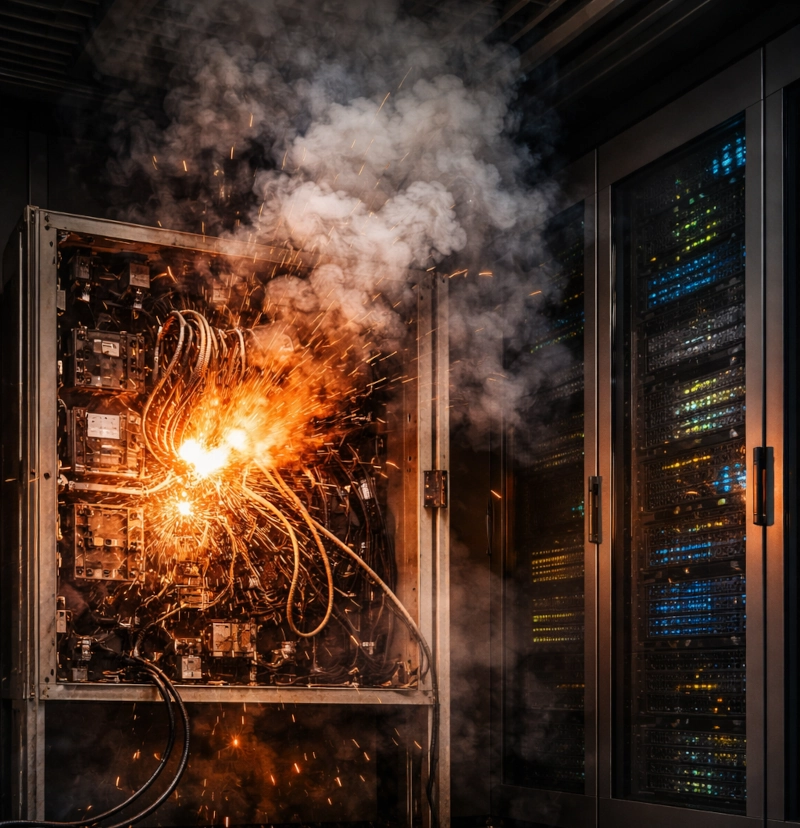
Failures in a data centre are rarely sudden. They are usually the result of small issues that go unnoticed. A loose connection, a weak battery cell, or poor airflow can quickly escalate into serious problems.
When maintenance is neglected, the consequences can include:
- Power instability causing system crashes or outages
- UPS failure due to undetected battery issues
- Overheating equipment from poor cooling or airflow
- Hidden electrical faults developing without warning
In the worst cases, inspections themselves can introduce risk. Working on live equipment without proper controls can expose engineers to arc flash hazards, capable of reaching temperatures of up to 20,000°C and causing severe damage in milliseconds.
These failures are rarely unavoidable. More often, they stem from a lack of visibility, issues that could have been identified early through routine inspection and testing.
👉 The difference between downtime and reliability is simple: finding problems before they find you.
The Takeaway
In an environment where uptime is everything, having the right tools, and using them effectively, makes all the difference. A structured approach supported by a well-defined data center maintenance checklist not only protects critical infrastructure but also supports long-term performance and efficiency.
✅ Sure up your predictive maintenance
Looking after a data centre requires more than reactive maintenance. By combining:
- Thermal inspections
- Power quality monitoring
- Battery testing
- Environmental analysis
- Strong safety practices
operators can move towards a data center preventive maintenance approach and ultimately adopt predictive maintenance data center strategies.
The result is improved reliability, reduced downtime, and greater operational efficiency.