Choosing Moisture Monitoring Equipment for Large Housing Portfolios
Across large housing portfolios, damp and mould problems rarely begin with visible damage. They start with small environmental changes - increasing humidity, cold surfaces, poor ventilation, and hidden condensation forming inside building materials.
By the time mould becomes visible on walls or ceilings, the conditions enabling it have often been present for weeks or even months. This is why housing providers are increasingly adopting moisture monitoring equipment to detect damp and mould risks early, allowing maintenance teams to intervene before problems escalate.
By measuring humidity, surface temperatures and dew point conditions, Property Inspectors can identify condensation risks long before mould develops. Modern tools such as thermal imaging cameras, moisture meters and humidity data loggers make it possible to monitor environmental conditions across entire housing portfolios.
Here are some of examples of where mould can form:
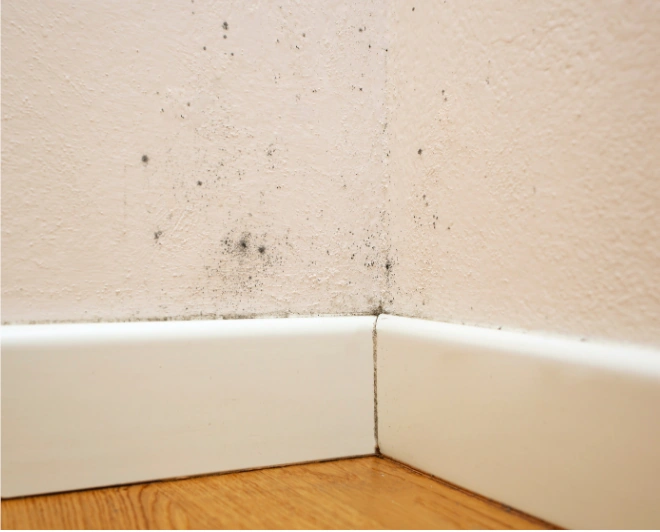
Lower Wall Mould: Condensation (the usual culprit) - Warm, moist indoor air hits cold walls near floor level, condenses, and feeds mould.
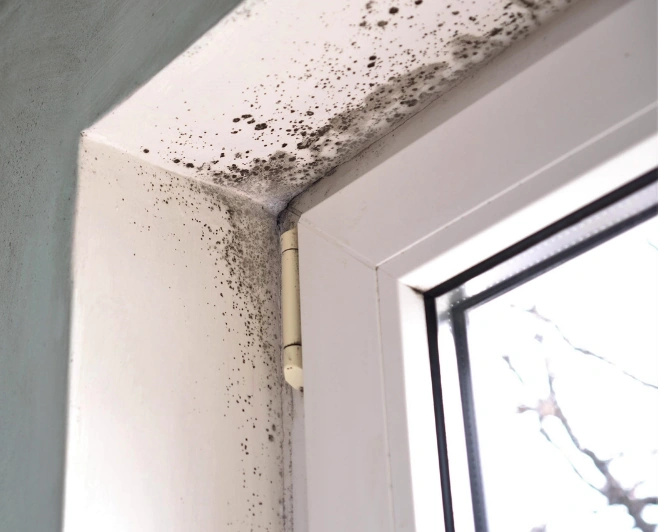
Around Window/Door Mould: Condensation (by far the most common cause). Warm, moist indoor air (from breathing, showers, cooking) hits the coldest surface in the room (the window) and turns into water.
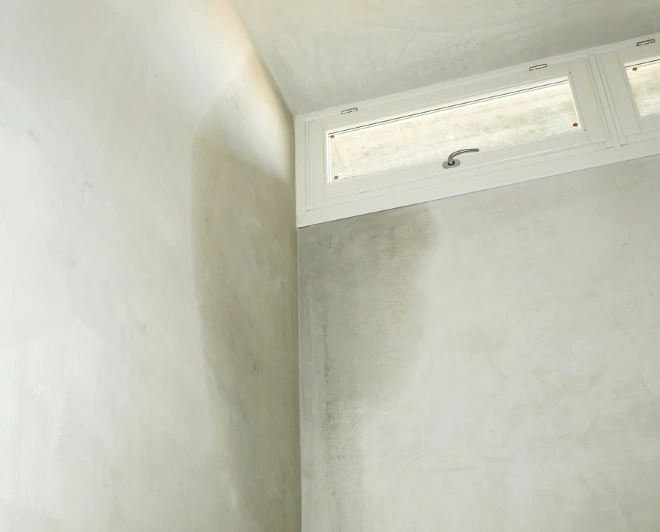
Where Roof Meets Wall Damp: Failed or damaged flashing (most common)
Why Monitoring Moisture Matters
Mould growth is directly linked to environmental conditions inside buildings. According to guidance on identifying mould risk, the key factors to monitor include:
- Air temperature
- Relative humidity
- Surface temperature
- Material moisture levels
These measurements allow inspectors to identify the conditions that allow mould to develop, particularly condensation forming on cold surfaces or damp building materials. Monitoring these factors consistently, helps housing providers detect risks earlier and take preventative action.
For organisations responsible for large estates, this data becomes incredibly valuable. Patterns in humidity or temperature across multiple properties can reveal ventilation issues, insulation problems or lifestyle-related moisture trends.
Instead of responding to complaints property by property, housing providers can begin managing damp and mould strategically across entire housing portfolios.
💡Understanding Dew Point and Why It Matters
One of the most important concepts when assessing condensation risk is dew point.
What is Dew Point?
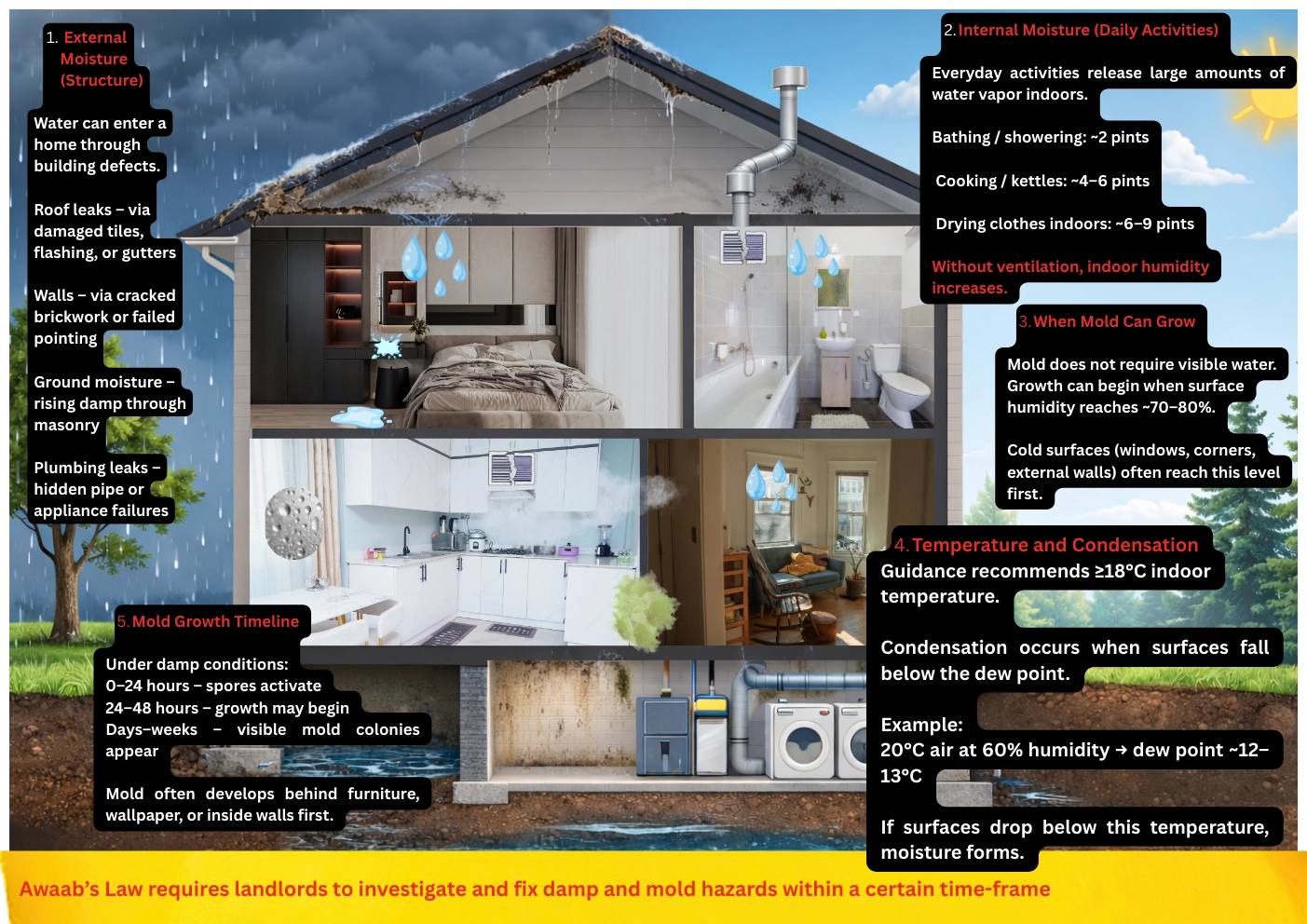
Dew point is the temperature at which air becomes completely saturated with moisture and water vapour begins to condense into liquid water.
In practical terms:
When a surface temperature drops below the dew point temperature, condensation will form.
This is why mould frequently appears on cold external walls, window frames, poorly insulated areas, or rooms with limited ventilation.
Why Dew Point Is Critical in Damp Surveys
By measuring:
- Air temperature
- Relative humidity
- Surface temperature
inspectors can determine whether a surface is approaching the dew point temperature.
If it is, condensation is likely to form.
Understanding dew point helps housing teams:
- Identify condensation risks early
- Detect cold bridges in building structures
- Demonstrate environmental causes of damp
- Recommend ventilation or insulation improvements
Many modern measurement instruments automatically calculate dew point, allowing Property Inspectors to quickly determine whether a room is at risk of mould development.
Essential Moisture Monitoring Equipment for Housing Inspections
Monitoring moisture across large housing portfolios requires fast, reliable measurement tools that can be used consistently by inspection and maintenance teams.
Testo instruments are widely used by housing professionals for this purpose.
Thermal Imaging Cameras:
Thermal imaging cameras allow inspectors to visualise temperature differences across surfaces, making it easier to detect cold bridges and hidden moisture patterns.
These cameras are extremely useful for identifying areas where condensation is likely to form.
💡 A compact, pocket thermal camera is a first-line thermal tool for identifying damp, moisture intrusion, and insulation gaps in buildings. Ideal for quick surveys and routine checks. For deeper diagnostics, advanced thermal cameras provide higher resolution and greater sensitivity, revealing subtle moisture patterns and hidden defects with improved clarity and confidence.
👉Full range of Thermal Cameras
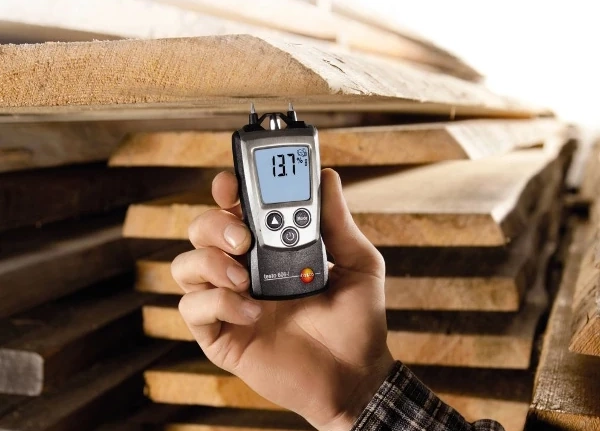
Moisture Meters – e.g. Testo 606-1
A moisture meter allows surveyors to measure moisture content inside building materials, helping identify damp structures, water ingress or areas affected by prolonged condensation.
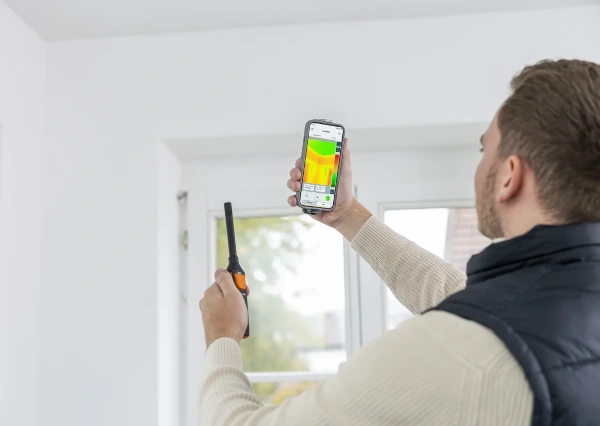
Smart Probes for Humidity and Surface Temperature - e.g. Testo Mould Kit
The Testo Smart Probes mould kit combines humidity measurement with infrared surface temperature readings. This allows inspectors to quickly evaluate dew point conditions and mould risk within individual rooms.
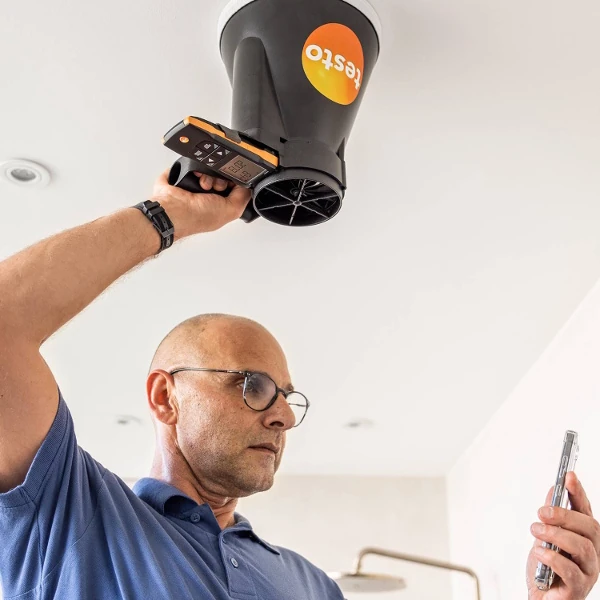
Poor ventilation is a major contributor to damp and condensation. The Testo 417 vane anemometer measures airflow at vents and extraction points, helping verify that ventilation systems are working correctly.
FEATURE PRODUCT
For long-term monitoring, humidity and temperature data loggers provide valuable insight into environmental conditions over time. These devices record data continuously, allowing housing providers to identify moisture trends across properties.
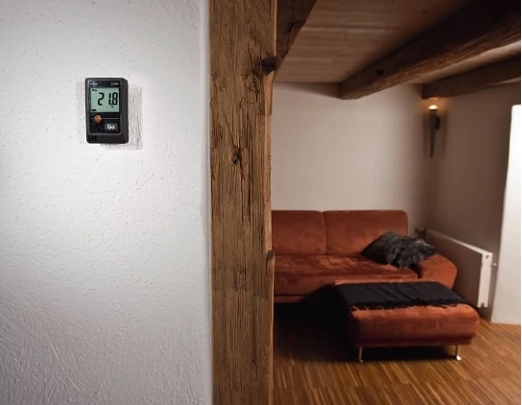
Get more from your testo 174 H with App or Desktop Software:
ComSoft Basic → Best for detailed analysis and office-based reporting.
testo Smart App → Best for quick setup, wireless access, and field work.
Turning Measurements Into Actionable Insight
Collecting measurements is only part of the solution. The real value comes from how that data is captured, analysed and shared.
Using connected software such as the Testo Smart App, housing inspection teams can:
- Record measurements instantly during inspections
- Automatically calculate dew point and mould risk
- Generate clear digital reports
- Share findings with team leaders, management and clients
- Track environmental conditions across multiple properties
Instead of isolated readings, housing providers gain structured data that supports compliance reporting and strategic maintenance planning.
A Smarter Approach to Damp and Mould Prevention
As housing regulations tighten and expectations increase around indoor living conditions, damp and mould management is becoming a growing priority for housing providers.
Many organisations are now developing portfolio-wide moisture monitoring strategies to identify risks earlier and demonstrate proactive property management.
By combining modern measurement equipment with connected reporting software...
...Housing providers can move from reactive repairs to proactive environmental monitoring - protecting both residents and property assets.
❓ Frequently Asked Questions (FAQ)
Q1: What causes damp and mould in housing properties?
A. Damp and mould typically occur when humidity levels rise and surfaces become cold enough for condensation to form. Building material/structure failures, poor ventilation, insufficient heating and everyday activities such as cooking, showering and drying clothes all contribute to indoor moisture.
Q2: What is dew point and why is it important?
A. Dew point is the temperature at which moisture in the air turns into liquid water. When surfaces fall below this temperature, condensation forms. Monitoring dew point helps inspectors identify where mould is likely to develop before it becomes visible.
Q3: What equipment is used to measure damp and condensation?
A. Typical equipment includes thermal imaging cameras, hygrometers, moisture meters and humidity data loggers. These tools allow surveyors to identify moisture sources and monitor condensation risks within buildings.
Q4: How do housing providers monitor mould risk?
A. Humidity data loggers are a great way to monitor mould risk, as they record temperature and relative humidity over time, allowing housing providers to identify conditions where condensation and mould growth are likely to occur.
Discover the Test Equipment
Discover the test equipment - read this blog to discover how the right moisture monitoring tools can help you identify mould risks earlier, measure dew point accurately, and share reliable environmental data with team leaders, management and clients.
View a complete list of moisture, mould and ventilation testing tools